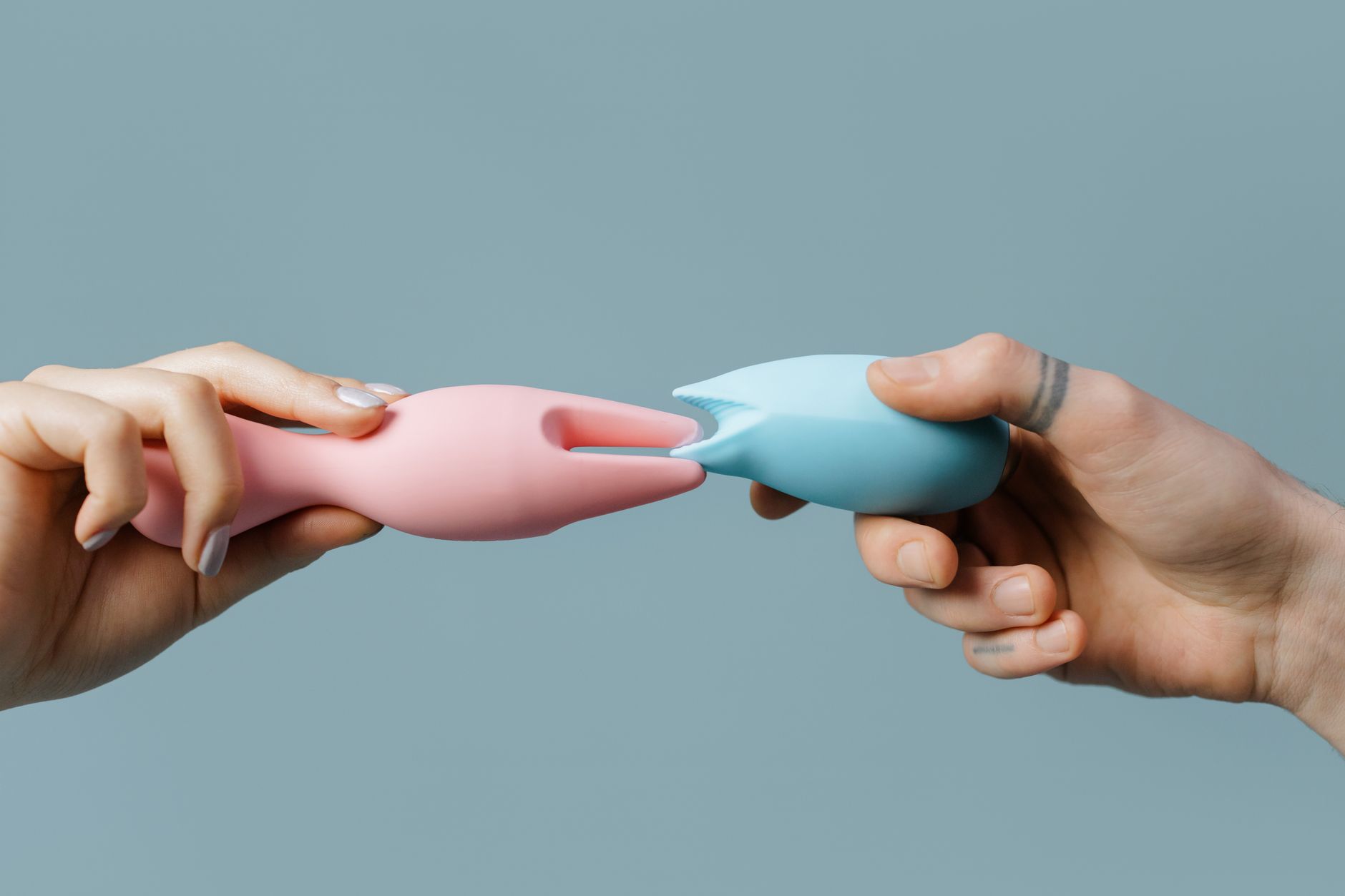
How to Use a Lemon Vibrator in Your Early 30s Without Numbing Sensation
Your 30s are the sweet spot for pleasure. A lemon vibrator can amplify it, but only if you're strategic about pacing. Here's how to keep sensation sharp and orgasms intense for decades.
You're finally comfortable in your own skin. You know what you want. You have the privacy and confidence to explore it properly. And then something creeps in: a lemon vibrator that once sent you straight to orgasm now feels like background noise.
It's not your body failing you. It's a real, fixable consequence of how we use pleasure tools. And the good news is your 30s are the exact right time to reset the dial.
Repetitive stimulation at the same intensity creates what neuroscientists call "neural adaptation." Your nerve endings get used to the signal and stop firing as enthusiastically. It's the same mechanism that makes a song you loved three months ago feel less thrilling now, or why a daily perfume scent becomes invisible to you.
With a lemon vibrator, this happens fastest when you're using the same pattern, same intensity, at the same cadence multiple times a week. Your clitoris literally develops a tolerance. The sensation doesn't disappear, but the spark does.
Here's what makes your 30s different from your 20s: you have enough sexual history to notice the shift, and enough life experience to do something about it before the pattern calcifies.
The single most effective way to restore vivid sensation is to give your body a real break. I don't mean a few days. I mean 7 to 14 days of zero vibrator use, multiple times a year.
This feels counterintuitive when you're in your sexual prime and access feels urgent. But a two-week reset does something a quick break can't: it fully clears out the neural adaptation. When you return, a lemon vibrator feels fresh again.
Make it planned, not punitive. Mark it on your calendar the same way you'd plan a trip. Some people build resets into their seasonal rhythm. Others pair them with life transitions (start of a new season, before a vacation with a partner, after a stressful work cycle).
If a two-week reset feels impossible (or lonely), rotation is your next-best move. This means alternating between different stimulation methods so no single nerve pathway gets overtaxed.
One week with your lemon vibrator at patterns 2-4. Next week, solo hand stimulation or partnered touch. The week after, try a different toy entirely if you have one, or return to the lemon at a gentler setting. The variety keeps your nervous system engaged.
Rotation also teaches your body responsiveness at different intensities. A lemon vibrator's suction patterns are powerful, yes, but they're not the only pathway to pleasure. If you can orgasm reliably with hand stimulation or a partner's touch, you've got redundancy. Your pleasure won't collapse if one tool feels less intense temporarily.
If you're using a lemon vibrator regularly and want to protect sensation, variety inside each session matters enormously. Don't lock into pattern 3 every time. Start at pattern 1, move to 2, jump to 4, drop back to 1. Change the angle or pressure every few minutes.
This keeps your nervous system alert. You're not letting your body predict and adapt. The variability itself becomes part of the stimulation.
I also recommend alternating between intentional, focused sessions (where you're trying to orgasm) and exploratory sessions (where you're just feeling what happens without a goal). The pressure to come creates tension that can actually dull sensation. Removing that pressure now and then resets your baseline arousal.
Your 30s are unique because you have enough sexual confidence to recognize when you've been chasing intensity instead of pleasure. Many people in their 20s use vibrators at high intensities because "harder equals better." By your 30s, you're often ready to recalibrate.
A lemon vibrator's lower patterns (1-3) actually produce longer, more sustainable arousal than patterns 5-6. This is true across clitoral anatomy. When you've been numb to pattern 6, dropping back to pattern 3 for two weeks can feel like revelation.
Try this: for seven days, commit to patterns 1-3 only. Your first session will feel underwhelming. By day four, you'll feel nuance returning. By day seven, pattern 3 will feel like what pattern 5 used to feel like.
If you're partnered, this is actually a gift. Tell your partner plainly: "I'm resetting my sensitivity, which means I need hands and mouths more than vibrators for a few weeks." Most partners find this shift interesting. You're asking them to lead. You're saying their touch matters more than a device.
Use vibrator pauses as a chance to remember what their hands feel like, what their rhythm is, how their touch differs from a machine's. When you reintroduce the lemon vibrator afterward, you'll feel the contrast, which sharpens sensation further.
If you're solo, a vibrator pause is your chance to reconnect with your own hands. Remember where you like to be touched. Remember the buildup that doesn't need a toy at all. That knowledge is foundational. A lemon vibrator is an amplifier, not a replacement.
Here's what I see most often in my practice: people feel ashamed when sensation dulls. They think it means something is wrong with them, or that they've broken their own pleasure somehow. They're not broken. They're just at the edge of adaptation.
Reframing helps. You're not giving up pleasure. You're optimizing for longevity. You're 30 years old. You have potentially decades of satisfying sex ahead of you. The moves you make now to protect sensation will compound. Strategic rest in your 30s means vivid pleasure in your 40s, 50s, and beyond.
Beyond the big moves, a few details shift sensation back into focus:
Clean properly. A lemon vibrator clogged with dried fluid loses effectiveness and feels less good. Warm water and a drop of soap after each use. Dry thoroughly. This isn't just hygiene. Clean toys feel fresher, and freshness primes your nervous system for stronger sensation.
Charge fully. A half-charged vibrator loses intensity gradient. Patterns 1 and 5 feel too close together. That flattens the experience. Charge your lem vibrator completely before sessions, and replace the battery if it's old. The difference is real.
Vary the lube. If you're using the same lubricant every time, change it. Different viscosity, different glide, different sensation. Water-based versus silicone-based creates genuinely different neural input. That variation keeps things sharp.
If sensation dulling happens alongside absent desire, difficulty with arousal separate from vibrator use, or pain, that's different. That needs a conversation with a gynecologist. Sensation adaptation from overuse is fixable. A deeper physiological shift might need clinical attention.
But if it's purely that a lemon vibrator that once worked great now feels meh, and the rest of your sexual life feels alive? That's just adaptation. That's fixable with the strategies above.
Your 30s are when you stop using pleasure tools the way you did at 22. You're not trying to prove anything. You're not learning from scratch. You're optimizing for sustainably great sex. That means rest, rotation, and rhythm variation.
A lemon vibrator is an exceptional tool. But the goal was never to live inside it. The goal is to have access to intense pleasure whenever you want it, for the next four decades. That requires treating sensation like the renewable resource it actually is.
Most people notice significant improvement within 7 to 10 days of no vibrator use. Full restoration typically takes 2 to 3 weeks. Some people feel the shift in just 5 days. It varies by individual baseline sensitivity and how long the dulling happened. The longer you've been using at high intensity without breaks, the longer the reset might take. But it always comes back.
Absolutely. You're not resting from orgasms, only from vibrator use. Hand stimulation, partnered touch, fantasy work, any other method is fine. The goal is to use different pathways. This actually helps sensation recover faster because you're exercising alternative neural routes. Orgasms without the vibrator during a reset period reinforce those pathways and make them more responsive.
Daily use isn't inherently bad if you're varying intensity, pattern, and duration within those sessions. But if you're using the same pattern at the same intensity for 15 minutes every single day, yes, adaptation happens faster. Most of my clients find that every-other-day or three-times-a-week use with rotation builds more sustainable pleasure than daily high-intensity sessions. Quality matters more than frequency.
No. Permanent damage isn't possible from vibrator use alone. What you're experiencing with dulled sensation is neural adaptation, which is completely reversible. Take a break, rotate methods, vary intensity, and sensation returns. Your nervous system doesn't forget. It just needs a reset signal.
Not necessarily. If it feels too intense, that usually means you're using it at the wrong pattern or pressure level, not that you need a different toy. Drop from pattern 5 to pattern 3 or 4. Decrease session duration. Use it less frequently. Most of the time, those adjustments restore the "just right" sensation faster than buying a new toy. That said, having access to a secondary, gentler option for rotation weeks absolutely helps protect long-term sensation.
Yes, that's actually ideal. Partnered touch during a vibrator break reintroduces variety and sensation novelty. Your partner's hands, mouth, and body create different pressure, temperature, and rhythm than a device. That variation accelerates sensitivity recovery. Tell your partner what you're doing and why. Most find it a chance to lead pleasure more actively, which often strengthens intimacy alongside restoring sensation.
Your 30s set the tone for everything that comes after. The habits you build now around sustainable pleasure, rest, and variation will compound into your 40s, 50s, and beyond. A lemon vibrator is exceptional. But your nervous system is more exceptional. Treat it with respect, give it breaks, and you'll have access to vivid, intense, reliable pleasure for decades.
If you want personalized guidance on rebuilding sensitivity or creating a sustainable pleasure rhythm for your body, reach out. That's exactly what I'm here for.