The part nobody wants to admit
Emotional distance kills desire faster than almost anything else. Not because your body suddenly stops working. Not because you're broken. But because pleasure, real pleasure, needs a foundation of felt safety and connection to land properly.
Here's what I see in my practice over and over: couples stay together for years while emotional intimacy slowly evaporates. Resentment builds. Communication narrows. And then one partner reaches for a lemon vibrator or other clitoral vibrator, not out of desire, but out of desperation to feel something again. That moment is important. It's not the end of the story. It's actually the beginning of one.
Why emotional disconnection changes how pleasure works
This isn't mystical. It's neurobiology. When you feel unsafe or unseen in a relationship, your nervous system stays partially activated in threat mode. That state is incompatible with arousal. Your body essentially says no before your mind even registers the question.
Meanwhile, your partner might be confused. They initiate. You freeze or decline. They interpret rejection as lost desire. You interpret their approach as not seeing you. Both of you are right, and both of you are missing the real problem: you're not emotionally tethered anymore.
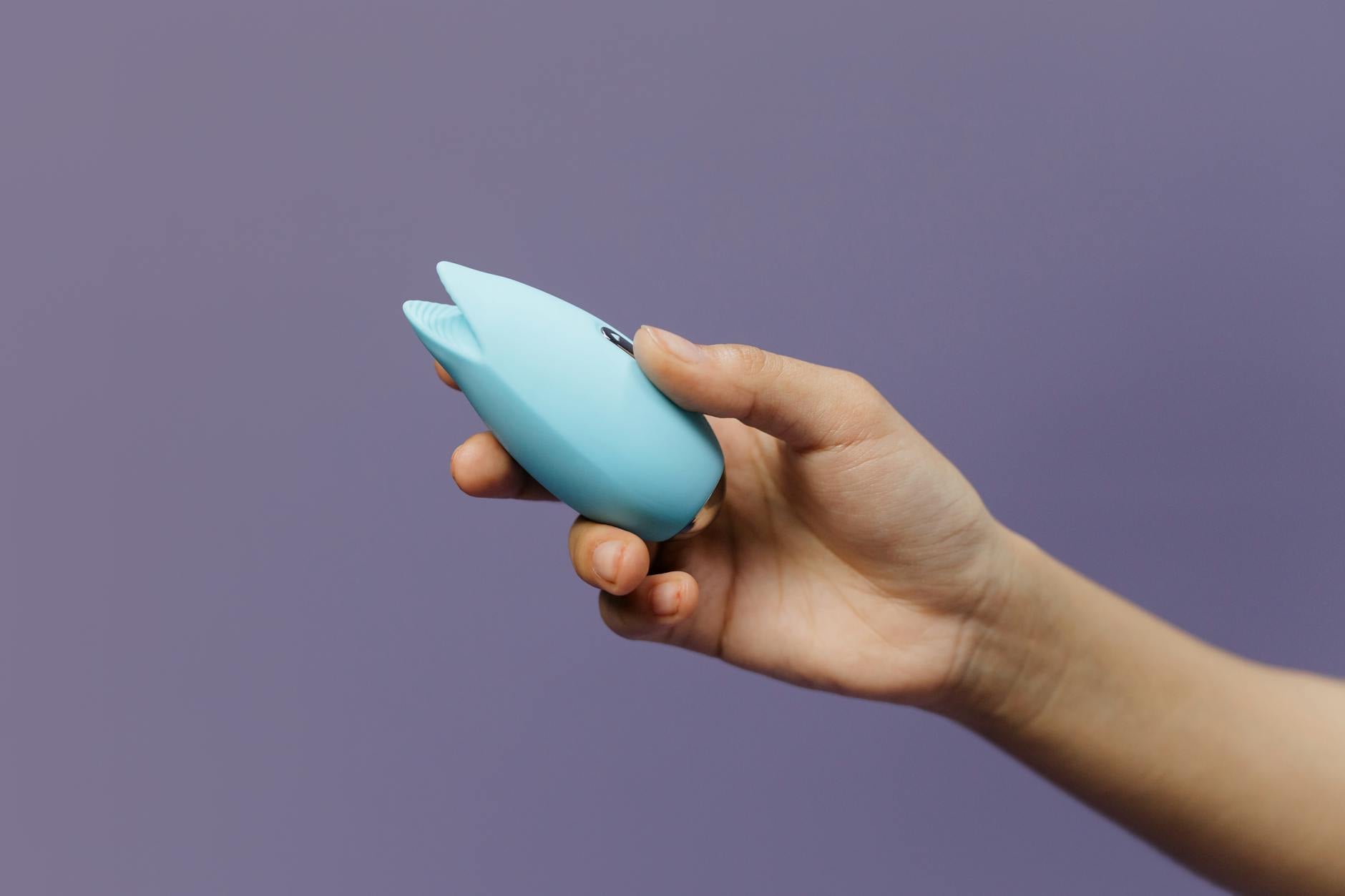
Adding a lemon vibrator into this scenario doesn't fix disconnection. But it can interrupt the shame cycle. Solo pleasure becomes a way to remind your body that it still works, that you're still alive, that sensation is still possible. And from that grounded place, you can actually begin to address what happened between you.
Solo exploration as diagnostic tool
Before talking to your partner, spend time alone with a lemon vibrator. This isn't selfishness. This is information gathering.
Start with low patterns. Notice what arises. Are you having trouble relaxing? That's not a toy problem. That's a nervous system problem, rooted in the disconnection you're carrying. Does arousal feel flat even when you're completely alone? That's grief. Does your body respond quickly but then plateau? That's anxiety about feeling too much or losing control.
The lemon vibrator becomes a mirror. It tells you what's real about your state right now, separate from your partner's presence or absence. Many people discover that their "low desire" is actually just suppressed desire in that particular relationship. When they're alone with a lem vibrator, their body remembers how to want.
Otherwise, your first conversation with your partner starts from confusion instead of clarity. You'll both be guessing.
Reframing the conversation with your partner
Do not lead with "I'm using a lemon vibrator because you're not satisfying me." That invitation to shame rarely ends well.
Instead: "I realized I'm not feeling safe enough right now to access my desire. I'm going to spend some time exploring that alone, and I want to tell you about it because it's not about you, and it's not about us being over. It's about me figuring out what I need."
Then stop talking. Let them sit with that. Their reaction will tell you something important. If they get defensive, that's data. If they soften, that's different data. Neither response is wrong, but both matter.
If your partner gets curious instead of defensive, you've found a wedge to rebuild on. That curiosity is where reconnection begins.
Using a lemon vibrator while rebuilding
Once you've named the disconnection and your partner has shown up (even imperfectly), solo pleasure with a clitoral vibrator can become part of the repair work.
Three specific ways:
First, use it as a stress relief outside the bedroom. A quick session with your lem vibrator before a difficult conversation can actually ground your nervous system. You're not adding pressure to perform for your partner. You're regulating yourself so you can show up more authentically.
Second, use it to practice pleasure in your body in their presence. This is harder than it sounds. Many people who've experienced emotional distance can't access pleasure when someone is watching. Start with them in another room. Graduate to them in the same room, not touching, just present. Then in physical contact but not trying to lead to something. The lemon vibrator becomes a teaching tool: "This is what my body needs right now. This is what I respond to."
Third, ask them to hold space while you use it. Not sexually. Just as witness. Many couples find this surprisingly intimate. Your partner gets to see you access your own pleasure without performing for them. You get to feel seen while you're vulnerable. Over time, this can rebuild the felt safety that evaporated.
What doesn't work
Don't use a lemon vibrator as a workaround for the real problem. If the core disconnection stays unaddressed, the vibrator just becomes another thing you do alone. The distance widens.
Don't expect a vibrator to reignite desire if the relationship itself is fundamentally broken. Some relationships are. Some partnerships have too much hurt or too little goodwill left to rebuild. A clitoral vibrator can't resurrect something that's already dead. What it can do is help you figure out if what you're grieving is the relationship itself or just the current season of it.
Don't use it as proof you're broken if pleasure doesn't return immediately. Rebuilding nervous system safety takes time. Weeks, sometimes months. Your body won't suddenly switch back on just because you bought a good toy.
When to bring in outside help
If you've spent a few weeks using a lemon vibrator solo and you're noticing genuine pleasure and arousal, but your partner still shows no curiosity about reconnection, that's a sign you need couples counseling. The problem isn't your body. It's the relational system.
If you're using your clitoral vibrator and finding that pleasure feels ashamed or guilty or like betrayal, talk to a therapist individually first. That shame is worth exploring before it hardens into resentment.
If you're noticing that solo pleasure feels good but the moment your partner enters the room, your arousal crashes completely, that's also a signal. Not a failure. A sign that your nervous system has learned to associate them with danger or disconnection. That's treatable, but it requires professional support.
Your lemon vibrator is not a substitute for real communication or real therapy. It's a tool that can help you access information about yourself and your relationship. What you do with that information is everything.
The bridge back
Emotional intimacy doesn't return through one conversation or one act of vulnerability. It returns through consistent small choices: being honest when it's uncomfortable, showing up for your partner's pain even when you're angry, letting them see you use a toy and not turning away from the exposure. It returns through bodies learning to trust again.
A lemon vibrator can be part of that return. Not the whole thing. Not the fix. But a way of saying to your body: "You're allowed to feel good again. Your desire matters. And this relationship is worth fighting for."
That fight starts alone. Then it becomes something you fight together.
People also ask
Can a lemon vibrator fix a relationship that's emotionally disconnected?
No. A lemon vibrator is a tool for reconnecting with your own body and your own desire. It can support the work of rebuilding emotional intimacy, but it can't replace the conversations and vulnerability that actual repair requires. Think of it as part of the toolkit, not the whole toolkit.
Is it normal to lose desire when emotional intimacy is low?
Completely normal. Your nervous system needs to feel safe and seen to access arousal. When those things are missing, your body naturally downregulates desire as a protective response. You're not broken. You're responding exactly as you're supposed to.
Should I tell my partner I'm using a lemon clitoral vibrator if we're disconnected?
Eventually, yes. But timing matters. Start with solo exploration so you have clarity about what's true for your body. Then, when you're ready, share it as part of a larger conversation about what you need to feel close again. Frame it as information, not accusation.
What if my partner gets jealous or threatened by my lemon vibrator?
That response tells you something important about where they are in the disconnection. Jealousy often masks fear or insecurity about the relationship itself. Have a conversation about that fear, not about the toy. "I notice you seemed upset. I want to understand what came up for you." Their answer matters more than defending the vibrator.
Can using a lemon vibrator solo make me less interested in partnered sex?
No, actually the opposite often happens. Solo pleasure with a lemon vibrator or other clitoral vibrator can remind your body what arousal feels like. That remembered sensation often makes you more interested in partnered sex, once the emotional foundation is rebuilt. The issue isn't the toy. The issue is whether the relationship feels safe enough to want that closeness.
How long before emotional reconnection actually feels different?
Varies wildly. Some couples feel the shift in weeks. Others take months of consistent small repairs. The key is noticing the small moments: the first time your partner asks what you need instead of assuming. The first time you laugh together over something real. The first time you feel seen after a vulnerable conversation. Reconnection is made of those moments, not one big gesture.
What to do next
If you're reading this and recognizing yourself in the disconnection described here, start small. Use your lemon vibrator alone. Notice what comes up. Write down what you observe about your own arousal, your own capacity for pleasure, your own nervous system state.
Then, when you're ready, tell your partner the truth: "I miss us. I don't know how to find our way back, but I'm willing to try." That vulnerability is the real tool.
If you need guidance on how to have that conversation or what comes next, we're here. Reach out at contact or explore resources on communication and intimacy that might help both of you find your way back to each other.