Let's be real about this first
Introducing a lemon vibrator to your partner isn't like breaking bad news. It's offering them a gift you've already discovered feels incredible. But the delivery matters. Most people don't know how toys work, what they're for, or how they fit into partnered sex. Your partner probably isn't nervous about the toy itself. They're nervous about what it means, whether they're doing something wrong, or if you're saying their touch isn't enough.
None of those things are true. But they're worth naming before you even open the box.
The conversation should happen before the bedroom
Don't surprise someone with a lemon vibrator in the moment. That's the cardinal rule. Introduce the idea when you're both clothed, not rushed, and have time to talk without performance pressure.
Try something like: "I've been thinking about adding something to our sex life that might feel amazing for both of us. I found this clitoral vibrator that I want to try together. Would you be open to that?" That's it. Direct, specific, and not framed as "I need this because something's wrong."
If your partner says yes right away, great. If they ask questions, answer them honestly. "Will it replace you?" No. "Does this mean I'm not enough?" No, it means you want more sensation together. "How does it work?" Show them the actual toy before sex happens. Let them hold it, turn it on, feel the different patterns against their own hand.
Familiarization kills weirdness. A lemon vibrator is not a secret. It's a tool. Treat it like one.
Show them the actual device
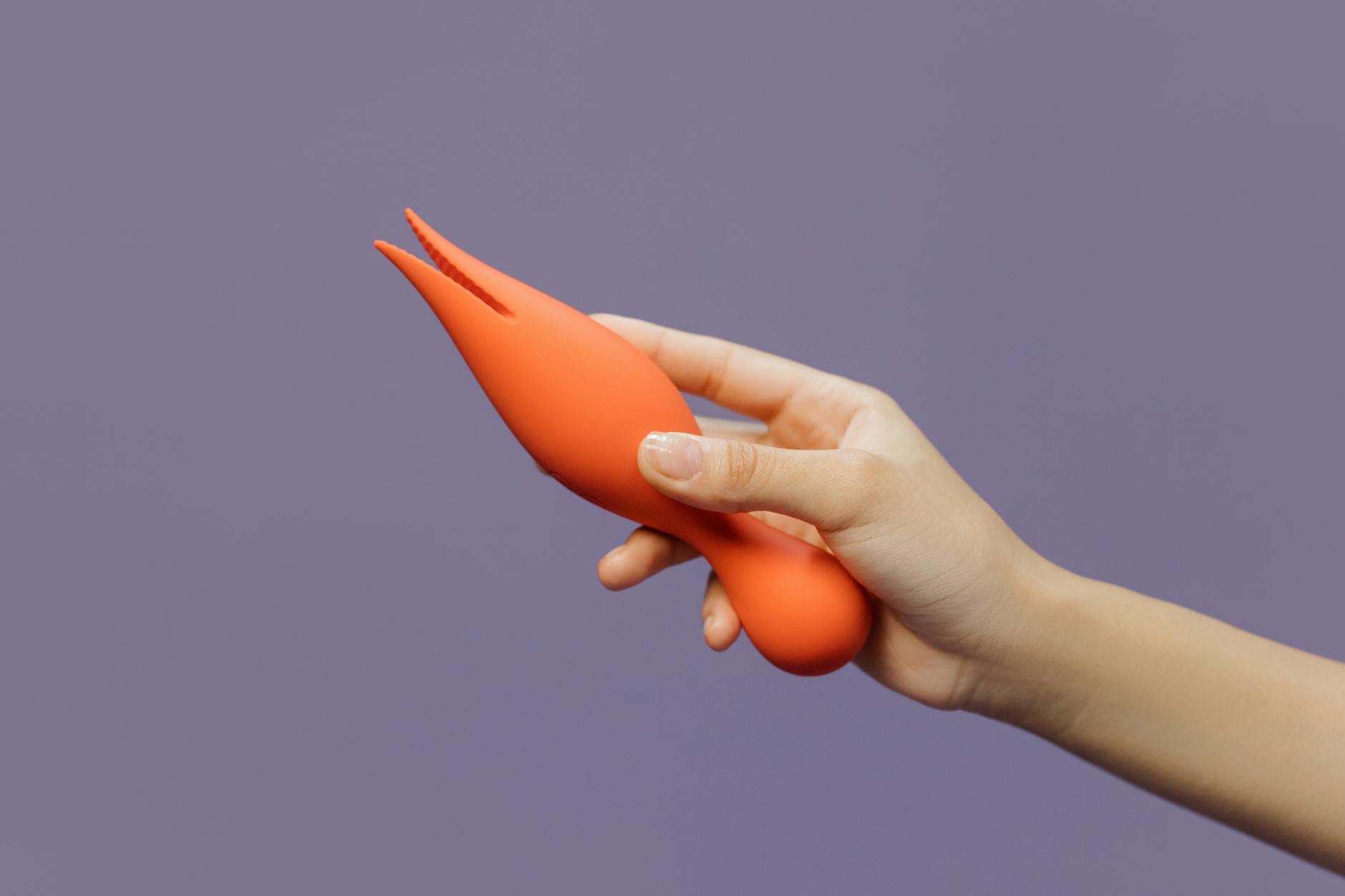
The Lemon Clitoral Vibrator is designed to look approachable. It's smooth, compact, and doesn't look medical or intimidating. Let your partner see it in daylight. Let them feel the weight. Turn it on so they know what the patterns sound and feel like. This takes two minutes and removes about 80% of the mystery.
Explain what it does: "This uses gentle suction on the clitoris instead of just vibration. It feels different than anything else." Then show them where it goes, how you'd position it, and that they can be hands-on during the whole thing. Some partners worry they'll be sidelined. Show them they won't be.
The first time should be low-pressure
Don't schedule it for a special occasion or build it up as The Big Event. That adds pressure. Instead, let it happen naturally during a time when you're both relaxed and interested in sex. No performance expectations. No "we have to make this count."
Start with you and your partner in a position where they can see what's happening and stay involved. Lying back while they're beside you or between your legs works well. Let them watch as you apply lubricant to the toy and position it. You controlling the toy the first time actually reduces pressure on them. They're not trying to figure out angles or intensity. They're just present.
Have them use their hands somewhere. Touch your breasts, your legs, your back. Run their fingers through your hair. The toy is one input, not the whole experience.
Intensity is a dial, not a switch
Most partners assume you'll turn the lemon vibrator on and immediately go to the highest setting. You won't. Start at pattern 1 or 2. Let your partner see and feel how gentle it is at low intensity. Then gradually explore what feels good. This also shows your partner that you're in control, that pleasure is gradual, and that you're present with them during the whole thing.
Talk as you go. "This feels good." "That pattern is my favorite." "Go back to that one." Your partner gets direct feedback about what works, and the conversation keeps them engaged instead of watching from a distance.
Anticipate the weird questions
Your partner might ask: "Doesn't this feel better than I do?" The honest answer is "Different, not better." A lemon vibrator stimulates nerve endings in a specific way that my hand can't replicate. It's not a ranking. It's addition, not replacement.
Another: "Do you feel numb after?" No. The Lemon Clitoral Vibrator doesn't numb sensitivity when you use it mindfully. The only risk is using it so intensely that you chase sensation, which is rare and entirely preventable. As long as you're paying attention to what feels good instead of what feels extreme, sensitivity stays sharp.
Will they ask if you've used it alone before? Probably. You can say yes or no. Either is fine. If you have, it means you already know what you like, which is actually helpful information you can share. If you haven't, it means you wanted to discover this together, which is romantic in its own way.
After the first time
Don't vanish afterward. Stay present. Talk about what you felt, what surprised you, what you want to try next time. Your partner needs to know they were part of something good, not sidelined by a toy.
If your partner didn't love it, that's okay. Not everyone connects with clitoral vibrators on the first try. Some people need multiple exposures to warm up to the sensation. Others prefer a different type of stimulation altogether. This isn't failure. It's data. Adjust and try again, or move on to something else.
If they did love it, you now have a shared pleasure tool. The next conversation is easier. The next time happens naturally. And your partner moves from "nervous about the toy" to "excited about the toy," which changes everything about how the experience unfolds.
What to watch for
Watch your partner's face, breathing, and body position. These tell you more than words. If they're leaning in, their pupils are dilated, and they're making eye contact, they're engaged. If they're pulling away or checking the ceiling, something's off. Ask. "How are you feeling?" is a sentence that costs nothing and answers everything.
Some partners get shy or embarrassed the first time they see you experience strong pleasure. That's normal. Reassure them. "Your being here makes this feel so much better." It's not a lie. The presence of someone you care about during vulnerability is its own form of intimacy.
Building from here
Once your partner is comfortable with the lemon vibrator as part of your sex life, you have options. They can use it on you while they're inside you or penetrating with their fingers. You can both hold it together. You can use it during foreplay and then remove it before penetration, or keep it in place throughout. The tool is flexible. The pleasure is scalable.
Some partners eventually ask to use it on themselves while they're with you, which is a whole other level of connection. The fact that they feel safe and curious enough to ask means the intro worked.
Introducing a clitoral vibrator like a Lemon vibrator to your partner doesn't require a manual or a lecture. It requires honesty, patience, and the assumption that they want you to feel good as much as you do. Start with a conversation. Show them the actual device. Go slow the first time. Stay present. And give them permission to be curious. When you do those things, the toy becomes less about the object and more about what it represents: your pleasure matters, and your partner wants to be part of it.
People also ask
Will my partner feel insecure if I use a lemon vibrator during sex?
Insecurity usually comes from feeling replaced, not from the toy itself. The best protection is communication. Tell your partner explicitly that the vibrator enhances what you already have together, not replaces it. Keep them involved. Let them control the toy sometimes. Maintain eye contact and physical affection. Partners feel secure when they're clearly part of the experience, not watching from the sidelines. If your partner struggles with insecurity even with clear communication, that's worth exploring separately as a couple dynamic.
How do I know if my partner is ready for this?
Your partner is ready when you've asked and they've said yes. You don't need special permission or perfect circumstances. What you do need is a partner who's willing to try something new with you. If they said no, respect that boundary and don't push. If they said yes but seem hesitant, give them an out. "We don't have to do this if you're uncomfortable." Most hesitation melts when pressure disappears.
Can I use a lemon vibrator if my partner doesn't want to participate?
Absolutely. Some partners don't want to be involved in toy play but don't mind if you use toys solo or with other partners. That's a different conversation, but it's valid. Solo use of a clitoral vibrator is normal and healthy. The "introduction to a partner" framing applies when you want to use it together, but your pleasure doesn't require your partner's participation.
Should I ask my partner's permission before buying a lemon vibrator?
Not necessarily. Your body is yours. You can buy and use toys independently. But if you're planning to use it with your partner, asking first shows respect and curiosity about their feelings. Buying it as a surprise and then introducing it is also fine, as long as you do the verbal intro before the bedroom intro. The surprise is the toy itself, not the concept.
What if my partner wants to use the lemon vibrator and I don't?
Not everyone likes the same toys or the same sensations. If your partner discovered lemon vibrators and wants to use one during partnered sex, you can absolutely explore how that works for you both. Maybe you hold it on them. Maybe they use it on themselves while you're involved in other ways. Your pleasure matters as much as theirs. It's a conversation, not a demand.
How many times should I use a lemon vibrator before introducing it to my partner?
You don't have to use it alone first. Some people prefer to discover it together. If you do use it solo beforehand, knowing what you like helps you show your partner what feels good. But there's no required number of solo sessions before partnered play. Go with what feels natural.