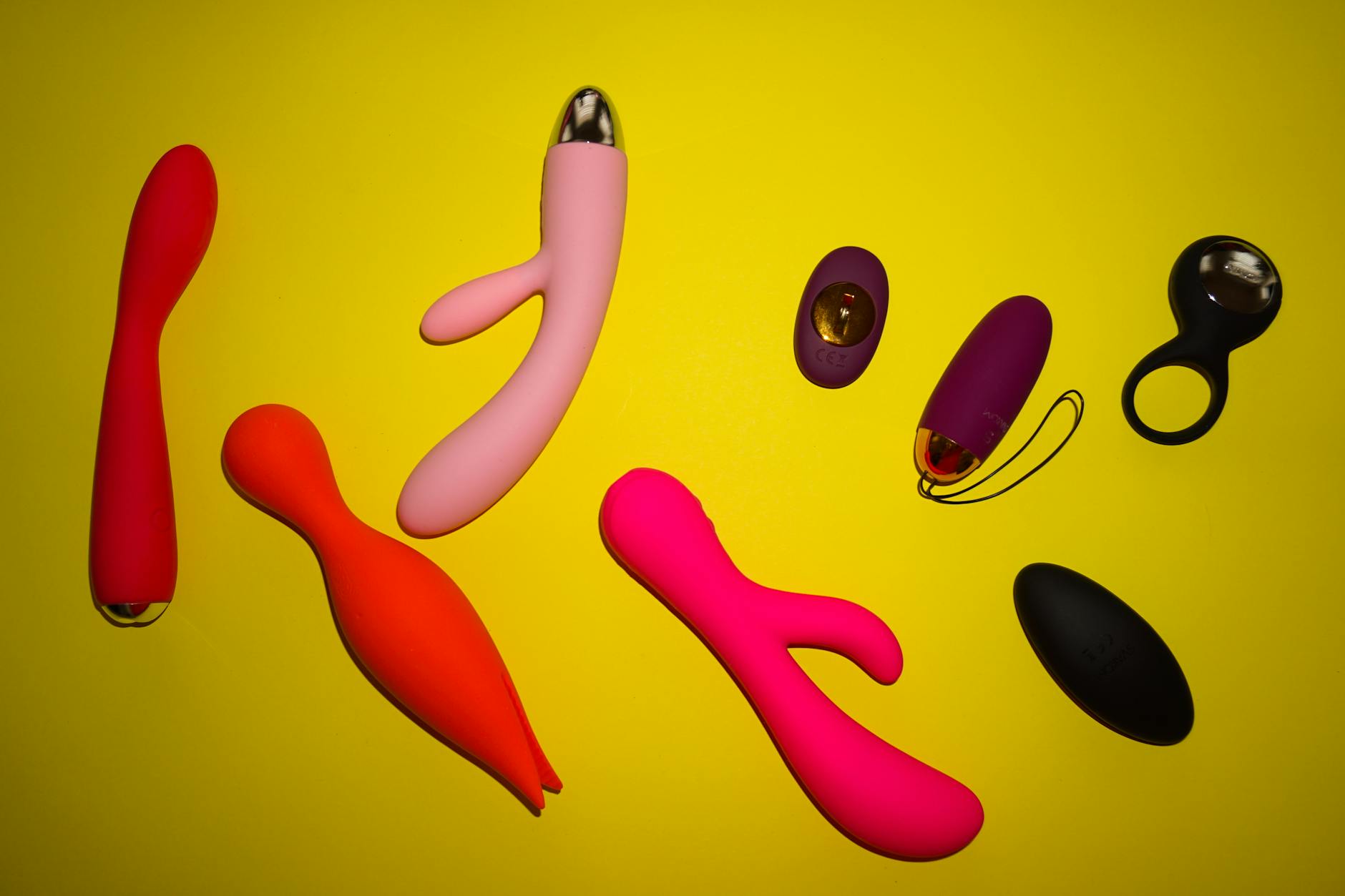
Let's talk about what climax anxiety actually is
It's not a personal failing. It's not weakness. Climax anxiety is a genuine physiological catch-22: the pressure to come kills arousal, which makes coming impossible, which deepens the belief that something is wrong. The cycle builds. Most couples never name it out loud, so it just lives there, quietly wrecking intimacy.
The good news is that a lemon vibrator breaks this pattern faster than almost anything else I've seen work.
Why pressure and pleasure can't coexist
Here's the neurobiology. When we're anxious, the sympathetic nervous system activates. Blood moves away from the genitals and toward the muscles. Heart rate climbs. Breathing gets shallow. The exact opposite of what needs to happen for an orgasm.
Now add the mental layer. Your partner is thinking about the pressure, not the sensation. They're monitoring themselves. "Am I close yet? Why isn't this happening? Does my partner think something's wrong with me?" That internal narrator is louder than any physical touch.
A lemon vibrator changes the game because it shifts the locus of control. Instead of your partner trying to make something happen, the vibrator is doing the work. That small permission slip can unlock the nervous system.
Why a lemon vibrator works for this specific problem
Three reasons lemon clitoral vibrators are uniquely helpful for climax anxiety.
First: the suction pattern breaks the performance script. Traditional vibrators often feel like "trying harder." Lemon suction toys (like the Lem vibrator) use a completely different sensation. It's not about intensity or speed. It's about a rhythmic pull that feels less like effort and more like play.
Second: it removes the pressure to reciprocate. When your partner is using their body or hands, there's often an underlying anxiety about "holding" the position, keeping rhythm, or proving they're enjoying themselves. A lemon vibrator lets them receive. That shift from performing to receiving is massive for anxiety sufferers.
Third: it reframes what "success" means. With climax anxiety, orgasm becomes the goal. Everything is measured against that target. A lemon sucker vibrator can refocus the session on sensation, not outcome. Some of my clients who've worked through climax anxiety report that removing the pressure entirely allowed them to experience pleasure they'd been chasing for years.
Setting up the conversation first
Before you introduce a lemon vibrator, your partner needs to hear this from you directly: "I love you. I'm not doing this because something is wrong with you. I'm doing this because I want us both to feel good, and I think this might help us get out of our own way."
Climax anxiety often lives alongside shame. Your partner may fear you're fixing a defect. Be explicit that you're not. You're removing an obstacle.
Then ask what they're most nervous about. Is it about being seen? About the toy itself? About the idea that they "need" something to finish? Listen without trying to fix it immediately. That conversation itself starts to lower the nervous system.
How to introduce a lemon clitoral vibrator in practice
Start with solo exploration if your partner's comfortable with it. Hand them the lemon vibrator, show them the settings, and let them play alone first. No performance. No observation. Just them learning what feels good without an audience.
When you return to partnered time, keep the first session low-key. You're not aiming for orgasm. You're aiming for "that felt good." Start with foreplay, build arousal naturally, then introduce the lemon vibrator when things are already warm.
Let your partner hold it or guide it. Control is crucial for anxiety. Even if you're the one moving it, check in: "Like this? Want me to shift?" The dialogue keeps the nervous system regulated.
Use this pattern for the first few sessions: start without the vibrator, build arousal for 10-15 minutes, then introduce the lemon clitoral vibrator. Let the session end whenever it feels right, orgasm or not. You're breaking the outcome dependency, not doubling down on it.
The patterns that help with climax anxiety
Most lemon vibrators have multiple settings. For partners with anxiety, start on pattern 1 or 2. Lower intensity often feels less overwhelming. Your partner can always go higher.
The rhythm that works best for anxiety is usually steady and predictable. Variable patterns can reintroduce performance pressure ("Will it switch again? Am I losing it?"). Steady suction gives the nervous system something safe to settle into.
Timing also matters. Some partners need 30+ minutes to calm down enough to respond. That's not unusual. It's not a sign of dysfunction. It's a sign that the anxiety is real and needs real time to release.
What to avoid when using lemon vibrators with an anxious partner
Don't introduce it as a "solution" to a "problem." Frame it as play, as exploration, as something you're curious about together.
Don't keep your eyes locked on them waiting for results. That gaze can amplify anxiety. Stay present but not watching. Touch them elsewhere. Look at what you're doing, not their face.
Don't push for orgasm. If after 20 minutes things aren't heading there, suggest stopping. This signals that your love isn't conditional on their climax. That message, repeated, is what actually heals climax anxiety.
Don't assume the same settings or patterns will work every time. Anxiety fluctuates. What worked beautifully last week might feel wrong today. Stay flexible.
The emotional work underneath the vibrator
Here's what I tell couples: a lemon vibrator is a tool, not a cure. The real shift happens when your partner starts to believe that their pleasure matters regardless of outcome.
That belief gets built through repeated experiences of being touched with no agenda. No timer. No goal. Just sensation.
If your partner has deeper trauma or severe anxiety, a vibrator alone won't fix it. Consider working with a sex-positive therapist alongside using adult toys. The combination of somatic work plus the nervous system reset that a lemon sucker provides creates real change.
For most couples, though, introducing a lemon vibrator into a conversation about pleasure (not performance) can shift the entire dynamic within weeks.
When you see the shift
You'll know it's working when your partner stops asking "Did I take too long?" or "Are you getting tired?" You'll know it's working when they can laugh during sex. When they ask for the vibrator because they want it, not because they feel they should. When the session feels like play instead of work.
That's not an orgasm shift. That's a freedom shift. And honestly, that's where lasting pleasure actually lives.
People also ask
Can a lemon vibrator make climax anxiety worse if it's used wrong?
Yes, if you position it as a fix for a broken partner. But the issue isn't the vibrator. It's the framing. A lemon clitoral vibrator in the context of "let's play" and "I want us both to feel amazing" is nearly always helpful. In the context of "we need to fix your orgasm problem," it can backfire. The tool isn't the problem. The pressure is.
How long does it usually take to see improvement with climax anxiety?
Varies widely. Some couples see a shift in the first few sessions. Others need consistent, pressure-free exploration for 4-8 weeks before the nervous system starts to trust that there's no performance requirement. The key is consistency without urgency. You're rewiring a pattern, not flipping a switch.
Should my partner use the lemon vibrator solo before we use it together?
That's ideal if they're open to it. Solo exploration removes the witness. Your partner learns what settings and patterns they like without anyone watching. Then when you bring it into partnered time, they already know it's not scary and they know what feels good. That knowledge is calming all by itself.
What if my partner feels emasculated or self-conscious using a lemon vibrator?
This ties back to the conversation. Some partners worry that introducing a vibrator means their partner isn't satisfied with them. That's a valid fear even if it's not true. Reframe it: "I love how you touch me. This is addition, not replacement. I want more ways to feel good together." If shame stays present, slow down and talk more before bringing the toy back in.
Can we use a lemon sucker vibrator if my partner is on antidepressants or anxiety medication?
Many SSRIs can dull sexual response. A lemon vibrator's suction sensation can be particularly effective for people on these medications because the sensory input is quite different from manual stimulation. But the real issue is the underlying anxiety, not the medication. A therapist who specializes in sexual side effects might also help. The vibrator plus professional support often works better than either alone.
What if my partner orgasms with the lemon vibrator but struggles without it?
That's progress, not a problem. You're building confidence. Orgasming with the vibrator proves the body can do it. Over time, as anxiety decreases, many partners find they can reach orgasm with less stimulation or without the vibrator altogether. The vibrator is the scaffolding, not the permanent structure. And that's okay.