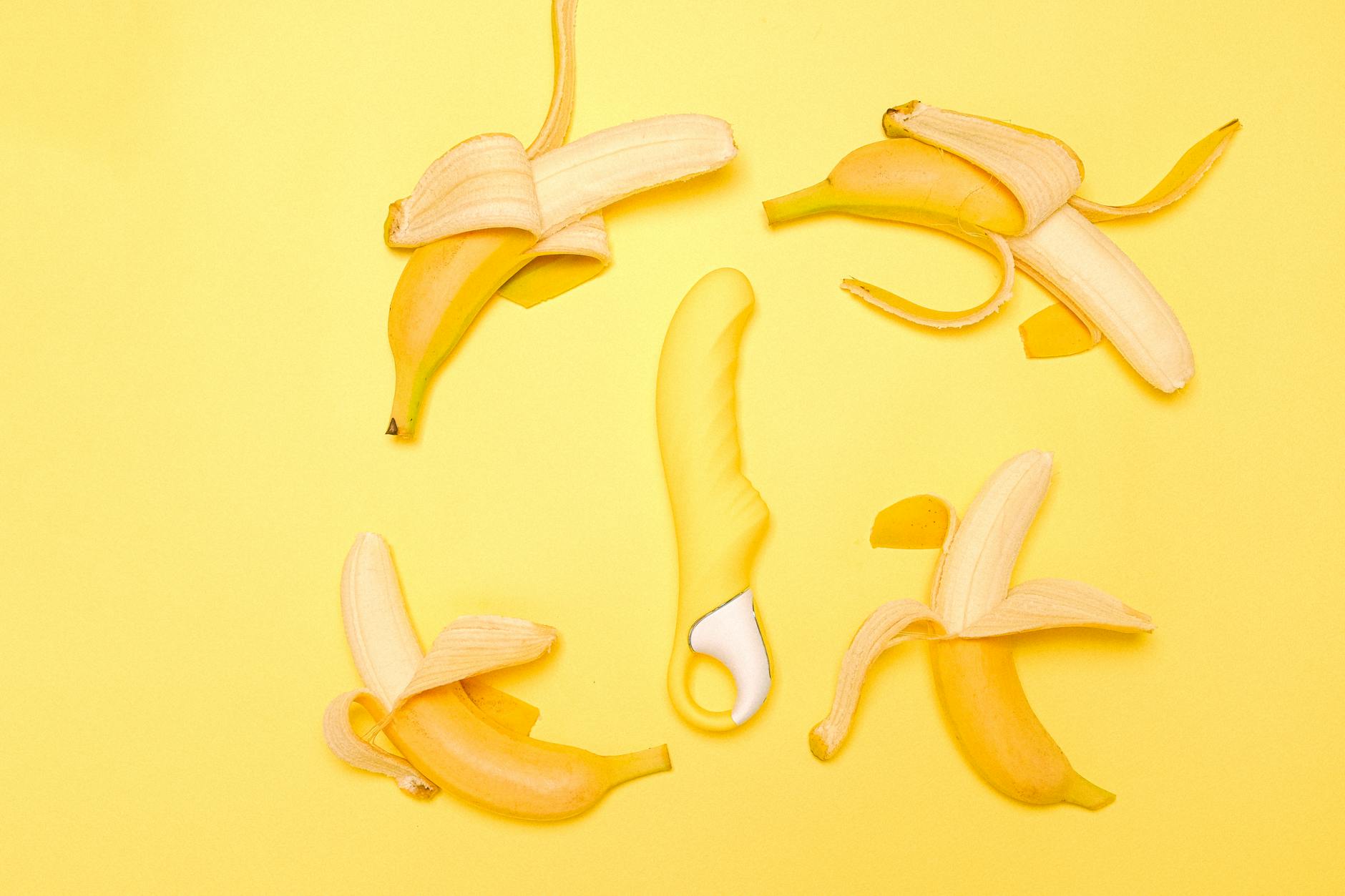
Let's talk about what actually creates an intense orgasm
Here's the thing nobody tells you: turning your lemon vibrator up to maximum power is not the shortcut to the best orgasm. In fact, it's often the opposite. The patterns matter infinitely more than the sheer intensity, and once you understand how patterns work on your body, you'll unlock orgasms that are wildly more intense than any brute-force approach could deliver.
I've worked with hundreds of couples navigating pleasure, and the single most common mistake is treating the vibrator like a volume knob. You wouldn't listen to your favorite song at maximum volume the entire time. You'd want dynamics. The same applies here. Patterns create rhythm, surprise, and deep stimulation that raw intensity simply cannot match.
Why pattern beats power every single time
When you use a lemon clitoral vibrator, you're not just applying vibration to the clitoris. You're stimulating a complex network of thousands of nerve endings across multiple tissue layers. Raw power activates all of them at once, which can feel overwhelming, desensitizing, or actually painful if you're sensitive.
Patterns, on the other hand, create a conversation between your body and the device. A pulse mimics the natural rhythm of arousal. A wave builds and releases tension in waves. A flutter creates micro-stimulation that keeps your nervous system engaged without overwhelming it. Your body actually has time to respond, recover, and build.
Science backs this up. Research on how the nervous system processes stimulation shows that varied, rhythmic input generates deeper neural activation than constant intensity. You're literally training your pleasure pathways to build stronger responses.
The core patterns explained
Most lemon sexual toys, including Hello Nancy's designs, offer between 8 and 12 distinct patterns. Here's what each one actually does:
Steady / Constant mode. This is your baseline. It's useful for warm-up and for people who find complex patterns distracting. But for intense orgasms? It's rarely the star. Use it as the opening act, not the headliner.
Pulse. Short bursts of stimulation with pauses between. This feels closest to manual stimulation and works brilliantly for people who find constant vibration overwhelming. Each pulse hits differently depending on where you are in your arousal cycle. Early on, pulses feel playful. As you build, they start to feel like a countdown.
Wave. Stimulation that builds, peaks, then drops, then builds again. This is the pattern that teaches your body how to ride waves of pleasure without crashing. It mimics the natural rhythm of arousal and orgasm. Many people report their most intense orgasms come from wave patterns because your nervous system never fully plateaus. You're always chasing the peak.
Flutter. Rapid, shallow bursts that feel more like teasing than penetrating stimulation. This one is genius for extended play because it doesn't desensitize quickly. You can use it for 15, 20, 30 minutes without that numb, worn-out feeling. It's also excellent for people with sensitive tissue or anyone who's been recovering from sensation loss.
Rhythm. This is closer to music than to raw vibration. There's a tempo, a beat, almost a song to it. Some rhythms are slow and meditative; others are playful. They're great for partnered play because both of you can feel the same rhythm, and it creates synchronicity.
Ramp or Build. This pattern starts slow and gradually intensifies over 10 or 15 seconds, then either drops back or plateaus. It's perfect for edging because you control where you are in that ramp. Stay at medium intensity and enjoy it. Let it peak into intensity and chase the orgasm. The autonomy is the whole point.
How to layer patterns for maximum intensity
Here's where most people miss the actual opportunity. You don't use one pattern from start to finish. You layer them.
Start with flutter or pulse. Get yourself to about 60 or 70 percent arousal. Your body's warming up, and you're not yet committed to any direction. Spend 3 to 5 minutes here, letting sensation build without pressure.
Switch to wave. Now your body knows what's happening, and the rhythmic rise and fall of wave stimulation starts to deepen your arousal significantly. You're building genuine tension, not just surface sensation. Stay here for another 5 to 8 minutes, depending on what feels right.
Then move to a ramp or build pattern for the final push. Your body knows what it wants now, and a pattern that's steadily intensifying gives your nervous system the signal to organize itself toward orgasm. That final phase might last 2 to 5 minutes.
The shift between patterns is key. Each change recalibrates your nerves, preventing desensitization and keeping sensation fresh. You're also building a mental narrative. Your body understands the arc: warm-up, deepening, finale. That understanding itself is intensely pleasurable.
The intensity question (and why less is often more)
Once you've picked a pattern, most lemon vibrators offer 3 to 5 intensity levels. Here's the counterintuitive part: starting at level 2 or 3 often leads to more intense orgasms than starting at level 4 or 5.
Why? Because your tissue is responsive. When you start high, you're immediately at the ceiling. There's nowhere to go, and your body adapts quickly. When you start at a medium intensity, you have room to build. That progression signals to your entire nervous system that something is happening. Your body mobilizes more deeply.
I recommend this approach: pick your pattern, start at level 2, and spend the first few minutes there. Notice how your body responds. Then, only if you feel like you want more intensity, move to level 3. You can always escalate. You can't unexpose your nerves to overstimulation.
The lemon clitoral vibrator's design actually supports this beautifully. The suction element means you don't need high intensity to feel the effects. Suction works on deeper tissue layers, so even lower intensity levels activate more sensation than you'd expect from a traditional vibrator.
Personalization: finding your ideal pattern sequence
Everybody's nervous system is wired slightly differently. What creates an intense orgasm for one person might feel uncomfortable for another. The only way to know your ideal sequence is to experiment deliberately.
Pick a pattern. Commit to using it for a full week, at least 3 or 4 sessions. Notice everything: how quickly you warm up, how long you can sustain it, what intensity level feels best, whether your orgasms are deeper, longer, or multiple. Don't change variables mid-experiment. That's how you actually learn your body.
After a week, try a different pattern sequence. Maybe you prefer flutter to pulse. Maybe you skip wave entirely and go straight from steady to ramp. Maybe you use rhythm for 10 minutes and never touch it again. Your data beats any advice I can give you.
One note: if you're using a lemon sexual toy with a partner, this exploration is also foreplay. Showing them what you like, explaining the patterns, letting them control the device while you guide them. That's intimacy and information at the same time. It's honestly more connected than a lot of conventional partnered sex.
When to switch patterns (and when to stay)
You'll know when a pattern has given you what it's offering. Sensation either plateaus (you're not building anymore) or starts to feel slightly numb. That's your signal to switch. Don't wait for numbness. Switch at the plateau.
Conversely, if you're in a pattern and sensation is still deepening, don't interrupt it just because time has passed. Stay until your body tells you it's ready for something new. Some sessions will be 10 minutes of deliberate layering. Others will be 25 minutes of one pattern that's just getting better.
If you're recovering sensation after desensitization, flutter becomes your best friend. It stimulates the nerves without the aggressive input that created the numbness in the first place. Spend weeks with flutter and low intensity. Let your tissue remember how to feel. The intense orgasms you got from high intensity and complex patterns are still there. You're just rebuilding the pathway.
Beyond the vibrator: what makes patterns actually work
Patterns are only one piece. Here's what else matters:
Mental focus. You cannot achieve an intense orgasm while checking your phone or mentally running a grocery list. Patterns work best when you're fully present. If you're struggling with focus, start with a simple pattern and zero distractions. Dim the lights. Put your phone in another room. Breathe deliberately. Presence is the actual tool; the lemon vibrator is just the amplifier.
Lubrication. Water-based lube on the toy and around the vulva lets the vibrator move in a way that dry stimulation cannot. It changes everything. Reapply halfway through if you're going for a longer session.
Pelvic floor awareness. The pelvic floor is part of your arousal system. If it's clenched the entire time, you're limiting your range. Spend time learning to relax it fully, then let it respond naturally to stimulation. That responsiveness is what creates depth in sensation.
Your nervous system state. You cannot build an intense orgasm from a state of stress or distraction. If you're tense, spend a few minutes with deep breathing before you even turn the device on. Your nervous system needs to know it's safe to let go.
FAQ: Your pattern and intensity questions answered
Should I use the same pattern every time, or switch it up?
Switch it up. Your body adapts to patterns, and sensation deepens when there's novelty. Try a new pattern every few sessions. You'll also discover combinations that hit differently than others.
How do I know if I'm desensitized or just bored with the pattern?
Boredom feels like lack of interest. Desensitization feels like numbness or a distant, muted sensation even with the vibrator directly on sensitive tissue. If you feel numb, move to a lower intensity and simpler pattern for a few sessions. If you feel bored, just switch to something new.
Can I use the same pattern during partnered play that I use alone?
Absolutely. In fact, showing your partner your favorite pattern is powerful information. They learn what your body actually wants, and you get pleasure plus partnership. Win.
Why do some patterns give me multiple orgasms and others just one big one?
Most people can chain multiple orgasms with wave, pulse, or rhythm patterns because they're gentler on the nervous system and keep sensation building rather than plateauing. Intense ramp patterns usually lead to one powerful orgasm, then a refractory period. Different, not better. Both are worth exploring.
Is it normal to prefer the same pattern consistently?
Completely normal. Some bodies are creatures of habit. If you find a pattern that delivers every single time, there's no rule against using it most of the time. Just occasionally (maybe once a month) try something new to stay responsive.
How long should a session be to feel the benefits of pattern layering?
Most people report that layering patterns requires at least 10 to 12 minutes. Shorter sessions can work beautifully with a single pattern and aren't any less valid. Longer sessions (20 to 30 minutes) allow patterns to build deeper psychological and physical responses. Both have a place.
The real work is listening to your body
Patterns are tools, and the lemon clitoral vibrator is genuinely well-designed for pattern play. But the actual magic happens when you stop treating pleasure like a problem to solve and start treating it like a conversation to have with your body. Patterns give you vocabulary for that conversation. Intensity gives you volume control. Your attention and curiosity do the real work.
Start with curiosity. Try a new pattern this week. Notice what happens. Then come back and try another. Your most intense orgasms aren't waiting somewhere out there. They're built in real time, pattern by pattern, when you actually pay attention to what your body is telling you.
If you're exploring patterns with a partner and the conversation feels awkward or disconnected, that's normal. Talking about what actually feels good is vulnerable. If you'd like support navigating that conversation, reach out.