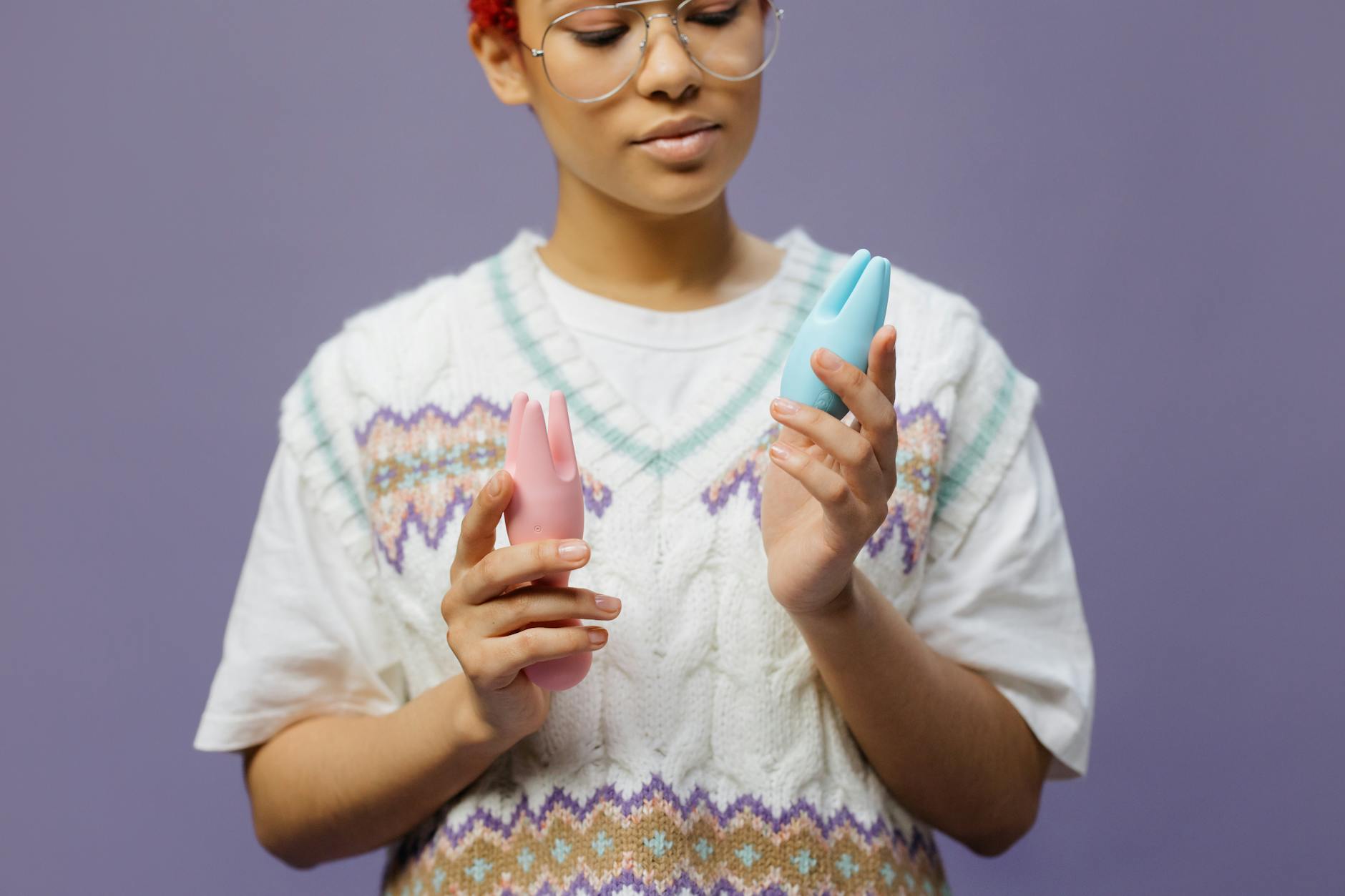
Let's talk about the intensity cliff
You get your new lemon clitoral vibrator. The first week? Absolute magic. Pattern 4 feels like a lightning strike. You're sold.
Week three. Pattern 4 feels like a gentle buzz. Pattern 7 is just okay. You start wondering if you got a defective device, or if your body is somehow broken.
You're neither broken nor scammed. What's happening is textbook nervous system adaptation. And here's the good news: it's reversible.
Why lemon vibrator intensity drops so fast
Your nervous system doesn't care about pleasure. It cares about survival. When a stimulus arrives repeatedly in the same way, your brain literally stops registering it as novel. This is called habituation, and it's not laziness. It's your nervous system doing exactly what it evolved to do.
Here's the chain reaction. When you use a lemon vibrator, it fires specific nerve endings in your clitoris and surrounding tissue. These nerves release neurotransmitters (chemical messengers) that create the sensation of pleasure. The first time, your brain is flooded with a novel signal. Everything lights up.
By week two, your nervous system has already flagged this signal as "safe, repeating, not an emergency." It starts dampening the response. The same physical stimulus now produces a quieter neural response. Neurologically, it's indistinguishable from the phenomenon why you stop noticing a scratchy tag in your shirt after ten minutes.
This isn't unique to air-suction lemon vibrators. It happens with traditional vibrators, manual stimulation, and even medication. Any repeated sensory input triggers it.
Suction-based toys like lemon clitoral vibrators can actually trigger habituation slightly faster than some alternatives because they deliver such precise, concentrated sensation. The nerve ending gets a very clear, very consistent signal, which your nervous system adapts to quickly.
The role of desensitization vs. habituation
Here's where it gets important to separate two things people often lump together.
Habituation is what we just described: your nervous system is filtering out a familiar signal. The tissue itself is fine. You're still responsive. Your brain just stopped paying attention.
Desensitization is different. It means the actual tissue (nerve endings, blood vessels) has genuinely reduced sensitivity. This is less common and usually happens with sustained or aggressive use over months, not weeks.
If you're noticing a dip after three to four weeks, it's almost certainly habituation, not desensitization. That matters because the recovery strategy is completely different.
Why some people hit the plateau faster
Three variables change the timeline.
Baseline sensitivity. If you're naturally responsive to vibration (some people just are), you'll habituate faster because your nervous system has more "room to dampen" before the sensation becomes unnoticeable. People with lower baseline sensitivity often take longer to experience the intensity drop.
Frequency of use. Using your lemon vibrator daily trains your nervous system faster than using it three times a week. More repetition, faster adaptation. This isn't moral judgment. It's neuroscience.
Attention and novelty. If you use the same pattern in the same position every time, habituation accelerates. If you vary the pattern, intensity, position, and partner involvement, your nervous system stays engaged longer. Novelty delays adaptation.
The reset that actually works
Let's be clear: you don't need to take a six-month break. That's overkill and honestly depressing.
Here's what works clinically.
Step one: Pause for 5-10 days minimum. Not forever. Just long enough for your nervous system to reset. You'll be surprised how quickly five days works. Some people notice a difference in three days.
Step two: Reintroduce at lower intensity. When you return to your lemon vibrator, start on patterns 1 and 2. I know it feels silly. Do it anyway. Your nervous system is primed to notice subtle changes again.
Step three: Rotate patterns intentionally. Never use the same pattern twice in a row. Jump from pattern 2 to pattern 6 to pattern 4. The unpredictability keeps your nervous system engaged.
Step four: Change context. Use your device in a different room, at a different time of day, with a partner if you usually solo, or vice versa. Environmental novelty reinforces neural novelty.
Step five: Extend the session. Instead of five-minute sessions, try 20 minutes on lower intensity. Slower arousal often feels more intense, paradoxically, because your entire nervous system is involved rather than just the target zone.
When the intensity drop is actually a red flag
Most of the time, this is fine. But occasionally, an intensity drop signals something else.
See a doctor if the intensity drops alongside pain, numbness, or visible redness that doesn't fade within an hour. This could indicate tissue irritation, which needs medical evaluation, not a reset protocol.
Also check if the dip coincides with medication changes, hormonal shifts, or new stress. Sometimes what feels like device desensitization is actually your nervous system running on a lower throttle because your cortisol is elevated or your antidepressant changed.
The long game with sensation recovery
Once you've done the reset, here's what prevents you from hitting the plateau again so hard.
First: vary your device. If you only own a lemon vibrator, that's fine. But if you're adding another tool (a wand, a ring, a suction toy), your nervous system gets fresh input streams. Cross-training works for pleasure the same way it works for fitness.
Second: embrace the rhythm of buildup and recovery. You don't need constant intensity. Some weeks you'll use your device frequently. Other weeks you'll step back. This natural cycle keeps your nervous system from settling into a fixed state.
Third: remember that intensity isn't the only metric of pleasure. Some of my clients report that after they've worked through the initial plateau, their experience becomes more nuanced. Orgasms might feel less like fireworks and more like waves. That's not a downgrade. That's evolution.
The nervous system is not your enemy
Habituation feels like a personal betrayal. Your body's responsiveness is tied to your pleasure, and pleasure feels tied to your worth. When sensation drops, it lands like a miniature grief.
But your nervous system is protecting you, not punishing you. It's doing exactly what it should. The reset works quickly precisely because your hardware is healthy. If you were actually desensitized or injured, recovery would take months.
Your lemon clitoral vibrator isn't getting duller. Your nervous system is just being efficient. And efficiency, once you understand it, is actually kind of impressive.