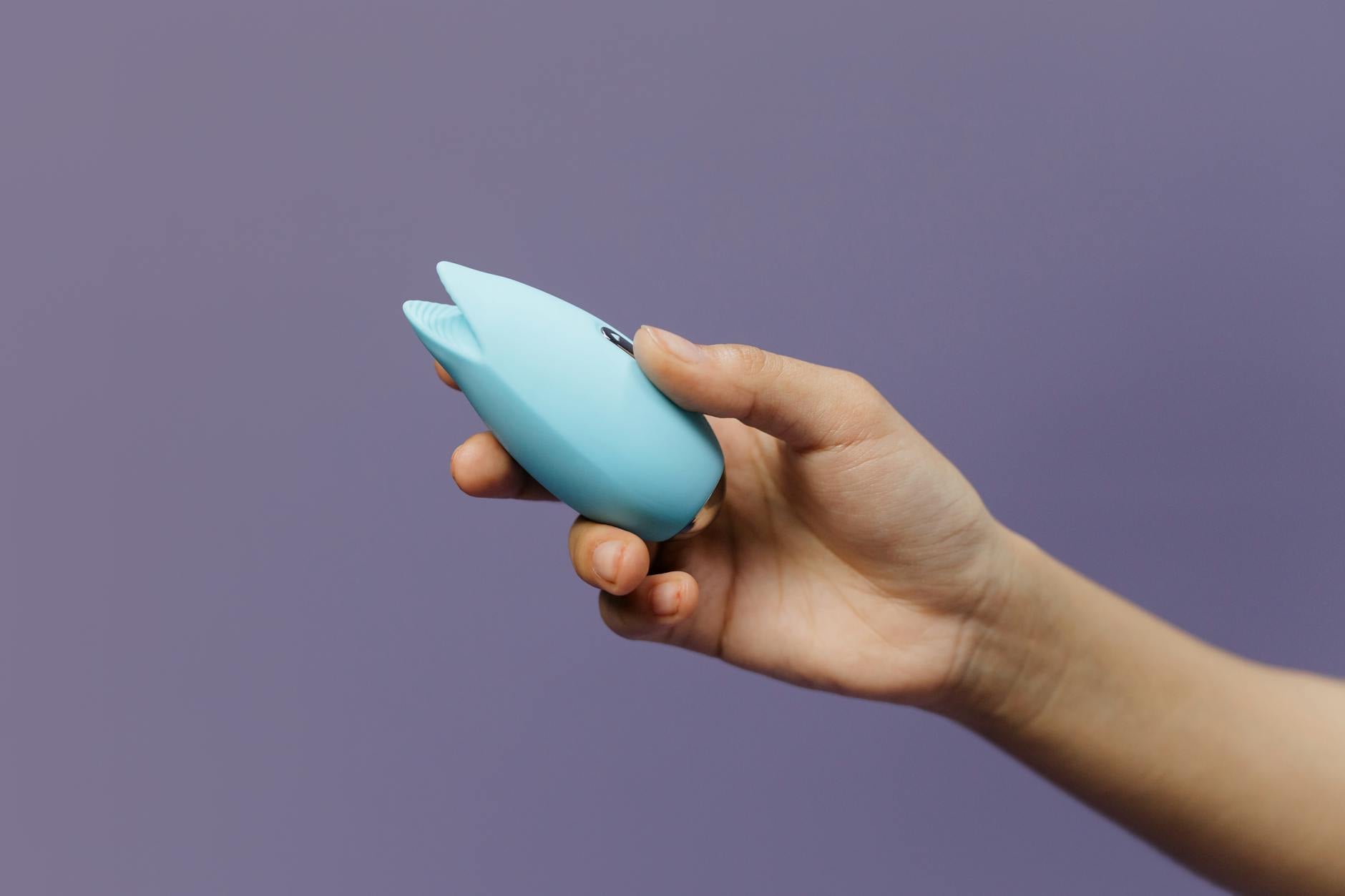
Let's start with the real thing
You're not imagining it. Your lemon clitoral vibrator doesn't feel the same on day 5 of your cycle as it does on day 19. That's not a product problem. That's your body being wildly, regularly hormonal, and most people never get a straight answer about what that actually means for sensation and pleasure.
Here's what's happening. Your clitoral tissue swells and shrinks across your cycle. Sensitivity peaks during certain phases. Lubrication changes. Blood flow to the genital area rises and falls. All of this is normal. All of this changes how a lemon vibrator, or any clitoral vibrator, feels against your skin.
The strange part? Nobody warns you about this. So you think the toy is broken, or you're broken, or something shifted permanently. Spoiler: it probably didn't.
The clitoral sensitivity map across your cycle
Your clitoris isn't a fixed object. It's tissue that responds to hormone changes the same way your breasts do. During the follicular phase, estrogen rises steadily. Blood flow to the clitoris increases. The tissue becomes more engorged, which sounds good until you realize that more blood also means less direct sensitivity to vibration. Think of it like the difference between pressing on a fully inflated balloon versus one with less air. The surface is less responsive to touch.
Most people report that the early follicular phase, especially right after menstruation, feels less intense with a lemon vibrator. The tissue is thinner. Lubrication is lower. It takes longer to build arousal. This is also when many people describe feeling "numb" or needing higher settings to feel anything at all.
Then ovulation hits. Estrogen peaks sharply. Testosterone also spikes (yes, your body produces this, and yes, it matters hugely for pleasure and sensation). Clitoral engorgement is at its maximum, lubrication is abundant, and here's the twist: for many people, sensation actually dips again during this window because there's so much blood flow that the tissue becomes almost sluggish to vibration. You need more intensity to cut through the sensation.
The luteal phase is where things get interesting. Progesterone rises as estrogen begins to fall. Many people report that this is their most sensitive window. The tissue is engorged enough to be responsive but not so flooded that vibration feels muffled. Your lemon clitoral vibrator often feels incredible during this phase. Patterns feel sharper. Orgasms come faster. The same settings that felt boring a week earlier now feel perfect.
Then, right before your period, sensitivity can dip again as progesterone crashes and estrogen drops. Your body is preparing for menstruation, and for some people, that means less sensitivity. For others, the opposite happens. Desperation and sensitivity peak right before your period starts, and you want everything on the highest setting.
Why this matters for your pleasure
The reason I'm telling you this isn't to make you feel complicated. It's to give you permission to adjust your approach throughout your cycle without thinking something is wrong.
You're not broken if your lemon vibrator settings need to shift week to week. You're not "losing sensation" if what worked beautifully during ovulation feels flat during day 8 of your cycle. Your body is literally different. The tissue is in a different state. The blood flow is different. Hydration levels are different. That's not a flaw. That's anatomy.
Many people describe a moment of panic when they realize their vibrator feels less intense. The assumption is always: "I'm getting numb. My toy is dying. I've damaged myself." Usually, none of that is true. You're just in a different phase of your cycle.
How to adjust without overthinking it
Four practical strategies I recommend to everyone who's tracking this.
Track what actually feels good. Not for a medical journal. Just a private note: "Day 12, lemon vibrator on pattern 3 was perfect. Day 5, needed pattern 5 to feel anything." After two cycles, a clear rhythm emerges. You'll start to anticipate when intensity will need to shift.
Don't assume it's desensitization. If your lemon clitoral vibrator felt amazing three days ago and feels blah today, the toy didn't change. You did. Biologically, not metaphorically. Knowing that means you won't panic or start chasing stronger and stronger vibrators when what you actually need is a different setting.
Experiment with patterns, not just intensity. Sometimes intensity isn't the right lever. Some patterns feel better when sensitivity is lower. The Lem's pattern settings are designed so that different wave speeds and rhythms can trigger different types of sensation. If pattern 3 feels flat, try pattern 7 before you turn up the intensity. You might find that a slower, deeper pattern works better during your follicular phase, while a faster pattern feels better during ovulation.
Shift your warm-up time. In phases where sensitivity is lower, your body needs more time to build arousal. That's not a weakness. It's just the reality of where you are hormonally. Budget 20 to 25 minutes during your follicular phase instead of 10. Your nervous system will catch up. Your pleasure will build. It just takes a different timeline.
The lubrication piece
Hormones also change how much lubrication your body produces. During ovulation, lubrication is usually plentiful. During your follicular phase, especially in the first few days after your period, it's often lower. This changes how your lemon vibrator or any clitoral vibrator feels because the glide is different.
If you're noticing that your vibrator feels less intense during these phases, lubrication might be part of the story. Water-based lube can change everything. It's not about being "dry." It's about optimizing the glide so that your vibrator can do its job. A little lube during your follicular phase can make your lemon vibrator feel shockingly more responsive.
When cycle tracking matters for pleasure
There's a whole conversation happening right now about whether cycle tracking is useful or just another way for people with vulvas to feel more neurotic about their bodies. I think the real answer is: it depends on what you do with the information.
If you're tracking your cycle so you can blame yourself for not being "horny enough" or "sensitive enough," that's not useful. That's just shame with data attached. But if you're tracking because you want to understand your body and adjust your pleasure practices to work with your biology instead of against it, that's powerful. You get to work with your lemon vibrator differently depending on where you are hormonally. You get to expect different things from your body instead of expecting yourself to be a static machine.
The bigger picture
Sensation isn't stable. Your body isn't a machine where you find the right setting and it stays locked in. You're a biological system that changes every day, and especially across your cycle. That doesn't make you difficult. It makes you normal.
The fact that your lemon clitoral vibrator feels different at different times of the month isn't a problem. It's information. Use it. Shift your patterns. Adjust your expectations. Change your intensity. Your pleasure deserves to be optimized for where you actually are, not where you think you should be.
People also ask
Why does my clitoris feel numb during my period?
During menstruation, blood flow is redirected toward uterine contractions. Your clitoris is getting less blood flow than it does at other times of your cycle, which can make it feel less sensitive. Additionally, progesterone levels are dropping, which affects tissue response to stimulation. This is temporary and usually reverses within a few days after your period ends. Many people find that they feel most numb right at the start of their period and progressively more sensitive as bleeding tapers off.
Can I use my lemon vibrator during my follicular phase if it feels less intense?
Absolutely. The follicular phase is a great time to use your lemon sucker if you want to. You might just need to adjust expectations. Spend more time on warm-up. Use water-based lube. Try different patterns instead of just turning up the intensity. Some people actually prefer this phase because lower sensitivity means they can have longer sessions without getting overstimulated. It's not about whether you can use it. It's about knowing that the experience will be different, and that's fine.
Is it normal for my lemon clitoral vibrator to feel more intense right before my period?
Yes, completely normal. As progesterone drops sharply in the luteal phase, many people experience heightened sensitivity. Your clitoris is still engorged with blood, but your nervous system is actually more responsive to stimulation. This is one of the most common times people report having the most satisfying orgasms. The intensity you're feeling isn't a sign that you're getting more sensitive permanently. It's a temporary peak that will shift once your period starts.
Should I change my lemon vibrator settings throughout my cycle?
Yes, if it helps you. Some people like to keep settings consistent and just accept that pleasure will feel different. Others prefer to actively adjust based on where they are in their cycle. Neither approach is wrong. If you're someone who finds it empowering to say, "I know I'm in my follicular phase, so I'm going to use pattern 4 instead of pattern 2," that control is genuinely satisfying. If you prefer to just let the experience unfold without planning, that works too. Do what feels right to you.
Could lower intensity during my cycle mean I'm losing sensation permanently?
Not necessarily. The most common reason intensity feels lower at certain times is cycle-related hormonal changes, not desensitization. That said, if you're noticing that your lemon vibrator feels less intense all the time, across every phase of your cycle, then it's worth exploring whether something else is happening. You might want to check out our guide on how to recover sensation if your toy feels consistently less intense, or consider speaking with a healthcare provider if the change is accompanied by other symptoms. But a temporary dip in sensation during specific phases of your cycle is just your body being normal.
Does everyone experience this cycle-related sensitivity shift?
Most people do, but not everyone experiences it the same way. Your cycle sensitivity might be dramatic or subtle. You might notice a clear pattern, or it might feel more chaotic. Stress, sleep, hydration, and other factors also affect sensitivity, so a cycle pattern can get noisy pretty quickly. The best way to figure out if this applies to you is to pay attention for two or three months and see if a rhythm emerges. If you're not noticing any pattern, that's valuable information too.
The takeaway
Your lemon vibrator isn't less intense because something is broken. It's less intense sometimes because your body changes throughout your cycle, and that's completely normal. Honor that rhythm. Adjust your approach. Use it as permission to work with your body instead of expecting your body to work the same way every single day. That's not accommodation. That's wisdom.