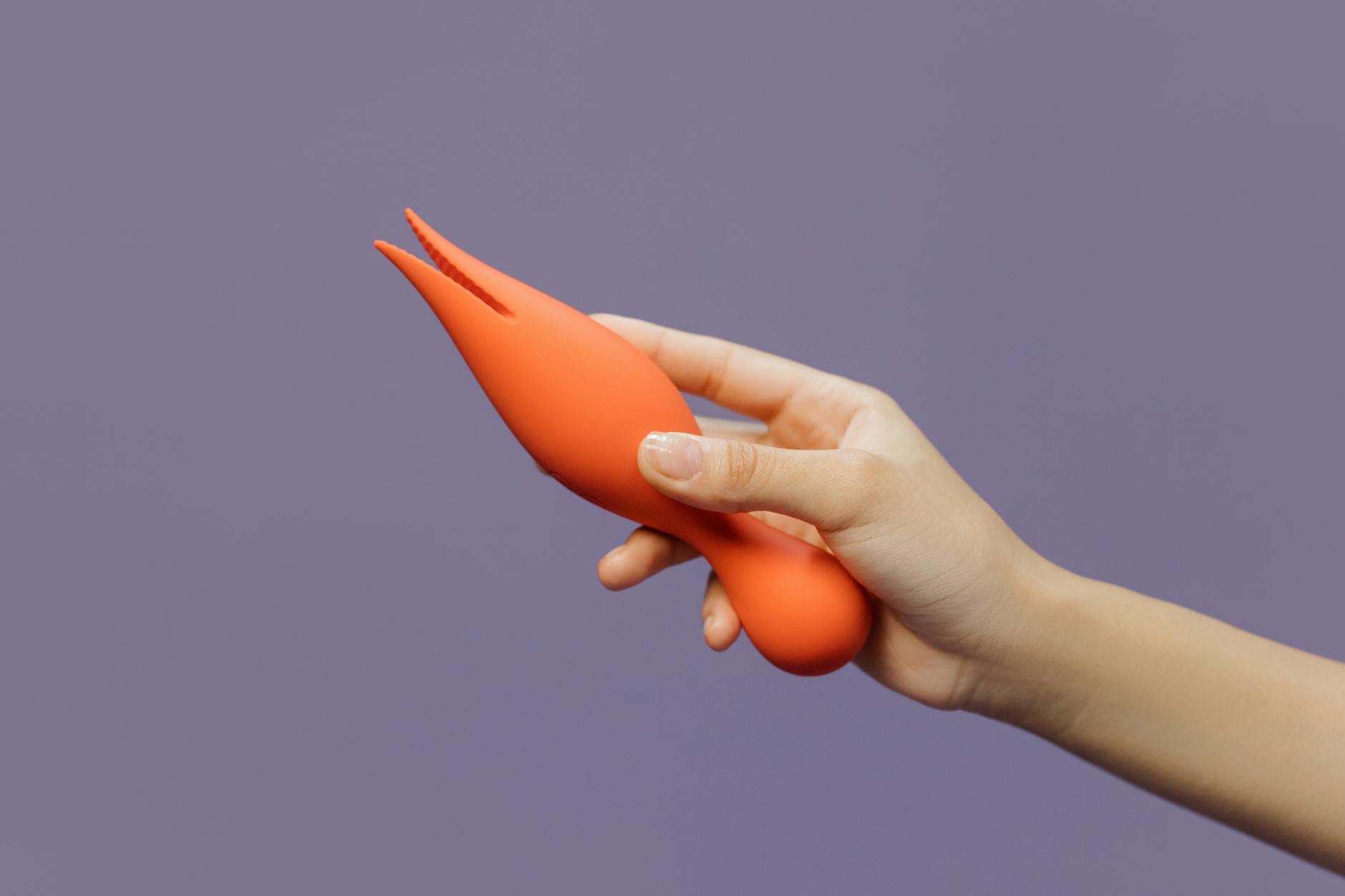
Why Lemon Vibrator Orgasms Feel Different in Long-Term Relationships
After years together, pleasure doesn't disappear. It transforms. Here's what's really happening, and why your best sensations might still be ahead of you.
Your orgasms probably feel different than they did five years ago. Not worse, necessarily. Just different. Maybe softer. Maybe harder to reach. Maybe they come faster but feel less intense. Maybe you don't come at all some nights, and you're not even bothered.
Most relationship advice treats pleasure like a thing you have at the beginning and lose over time. It's not. It changes shape. And when you understand why, you can actually make it better than it was.
When you first get together with someone, novelty floods your brain with dopamine. New body, new sounds, new everything. That's the accelerant. Over time, your nervous system gets used to your partner's touch. This is called habituation. Your brain literally stops generating the same chemical response because the stimulus is predictable.
This isn't a relationship problem. It's a neurology problem. And it's not permanent.
The clitoris has about 8,000 nerve endings. A lemon vibrator works because it introduces stimulation that's different from a partner's touch. Even if you've been together for twenty years, your nervous system registers the vibration pattern as new information. This isn't cheating or replacing your partner. It's literally adding a new kind of signal to the system.
My couples clients often find that adding a clitoral vibrator into partnered sex reignites the responsiveness they thought they'd lost. The lemon vibrator's suction pattern, especially, creates a sensation that human hands can't replicate. Your nervous system wakes back up.
After a decade together, you both know the routine. You know what usually happens, what usually feels good, what's probably going to fall flat. That knowledge kills spontaneity. And spontaneity is what keeps pleasure novel.
Here's what I see happen: one partner (usually the one with a vulva) stops initiating because they already know the outcome. The other partner interprets silence as lack of interest. Then nobody initiates. Then sex becomes something scheduled or skipped entirely. The body adapts to that rhythm, and orgasms get harder.
Introducing something new, like a lemon clitoral vibrator, breaks that loop. It creates a conversation. "Do you want to try this?" "How does this feel?" "Should we use a pattern that's different from usual?" Suddenly you're not running the script. You're improvising.
That shift in context is as much a turn-on as the device itself.
Early relationships have a kind of anticipatory anxiety that can read as intensity. You're never quite sure what will happen. There's an edge.
Long-term relationships trade that edge for something different: the ability to completely let go. You trust this person. You don't have to perform. You don't have to worry about judgment.
This is actually a better foundation for pleasure, not worse. But many people miss the edge and mistake depth for decline.
A lemon vibrator in a long-term relationship can work like a permission structure. "Okay, tonight isn't about me performing my usual response. We're trying something different." That permission creates safety, and paradoxically, safety creates deeper arousal. Your nervous system doesn't have to spend energy on surveillance and control. It can actually feel.
If you've been with the same partner for a long time and you've been using the same techniques, your body adapts. The pattern becomes background noise. It has to be stronger or different to register.
This is why many long-term couples need more intensity, more variation, or more creativity as time goes on. It's not that your sensitivity has declined. It's that your nervous system has learned to tune out the familiar signal.
A lemon vibrator offers multiple patterns. Most start around pattern 1 and go up to 8 or 10. The ability to shift patterns mid-session, or even mid-orgasm, keeps your nervous system engaged. You're not habituating because the stimulus keeps changing.
I recommend couples who've been together 10+ years experiment with patterns intentionally. Don't just use the highest setting. Try building arousal on pattern 2, shifting to pattern 5 at a certain point, then trying pattern 7 right at the edge. Your nervous system responds to variation. Your partner responds to seeing you respond. It becomes a feedback loop instead of a routine.
Something shifts in long-term relationships around the 7-to-10-year mark. You've weathered things together. Real things. Money stress, family conflict, maybe infertility or illness. That stress lives in your body.
Your pelvic floor tightens. Your nervous system stays in a low-grade alert state. Pleasure requires relaxation, and relaxation is harder when you're carrying weight.
Using a lemon clitoral vibrator with your partner becomes less about "getting off" and more about "checking in with my body and what it needs right now." Some nights, the answer is intensity. Some nights, it's gentleness. Some nights, it's just permission to take 20 minutes and feel good without a destination in mind.
That flexibility, that permission to be where you are instead of where you think you should be, is actually what rekindled pleasure looks like in a long-term relationship.
In my practice, I see couples who've stopped talking about sex because sex has become complicated. One person wants more. One person wants less. One person's body doesn't respond like it used to. So they stop trying, which feels safer than talking about it.
Introducing a lemon vibrator almost always forces a conversation. "I want to try this." "How would you feel about this?" "What would work for you?" These are not sexy conversations in the abstract. But they are transformative in practice.
I had one couple, married 18 years, who hadn't talked about pleasure in probably five years. One partner brought home a lemon clitoral vibrator. Instead of using it alone, they used it together their first time. They spent 45 minutes talking about what patterns felt good, what the other partner noticed about the other's responses, what they'd both been missing. Sex got better. But also, the conversation got better. They started checking in about other things too.
The device was almost beside the point. It was the permission and the conversation that mattered.
Long-term relationships often span massive biological changes. One partner goes on antidepressants. One partner enters perimenopause. One partner ages into a totally different body.
When pleasure changes for a medical reason, it's easy to blame the relationship. "We've lost the spark." Actually, your partner's SSRI just changed their orgasm response. Or your body is going through a transition that needs different stimulation.
A lemon vibrator is medically neutral. It works the same way whether you're on medication or not, whether your hormones are surging or flatlined. It can be the constant while everything else is shifting. And that consistency can actually help you both adjust to the change without catastrophizing about the relationship.
First, talk about it outside the bedroom. "I've been thinking about trying a lemon vibrator with you. Would you be open to that?" This isn't a rejection of your partner. Frame it as addition, not replacement.
Second, start slow. Introduce it during foreplay, not as the main event. Let your partner touch it while you wear it or use it on yourself while they're inside you or beside you. There's no one right way. Find the configuration that feels good for both of you.
Third, pay attention to patterns and intensity. Most people don't need the highest setting. Patterns 2 through 5 feel best for many bodies, especially in long-term relationships where you're trying to stay connected and present, not just chase climax.
Fourth, keep talking. "How does this feel?" "Do you want me to change the pattern?" "What do you notice about my responses?" The conversation is part of the pleasure.
No. It means your body has adapted to familiar touch and needs variation to keep waking up. Same reason couples try new positions, new locations, new times of day. A lemon clitoral vibrator is just one form of novelty. It's not a referendum on your relationship.
Not if you vary the patterns and take breaks. The key is intentional use, not constant use. One to three times a week is plenty. Use patterns 1 through 5 instead of always going straight to 8. This keeps your nervous system responsive without adaptation.
Frame it as something you want to experience together, not something you need instead of them. Invite them to hold it, use it, choose the pattern. Make it collaborative. Many partners find that watching their long-term partner's responses to new stimulation is actually really hot. This can deepen intimacy, not threaten it.
No. Different nerves fire. Different parts of the clitoris get stimulated. Both types of orgasm are valuable. Some people find vibrator orgasms are sharper and faster. Partner touch orgasms can feel deeper or more full-body. In a long-term relationship, having both options means you can respond to what your body needs on any given night.
Maybe, but not as a solo fix. If you're in your 50s or 60s, hormonal changes might be in play. A lemon clitoral vibrator could help, but so could talking to a doctor about testosterone, considering topical estrogen if you're post-menopausal, and doing pelvic floor physical therapy if tension is an issue. The vibrator is one tool. The conversation with a healthcare provider is the foundation.
Then you've learned something. You tried something new together. That alone is a win in long-term relationships. Not every experiment lands. But the willingness to experiment, to not give up on pleasure, to treat it as something worth tending to even after decades. That's what actually rebuilds intimacy.
Long-term relationships aren't supposed to feel like the beginning forever. That's actually a setup for disappointment. What they're supposed to do is deepen. Become more textured. More interesting.
Pleasure in a long-term relationship looks like two people who have earned the right to be completely themselves with each other, who know what matters and what doesn't, and who are willing to keep experimenting instead of settling.
A lemon clitoral vibrator isn't going to save a broken relationship. But for a solid relationship where pleasure has gotten a little flat, where you're both still interested but not quite sure how to reignite things, it can be exactly the conversation starter and the nervous system reset you need.
Your best orgasms might not be behind you. They might just be waiting for you to try something different.
If you're thinking about bringing new tools into your long-term partnership, reach out. I'm here to help you figure out what works for your relationship at this stage of the game.