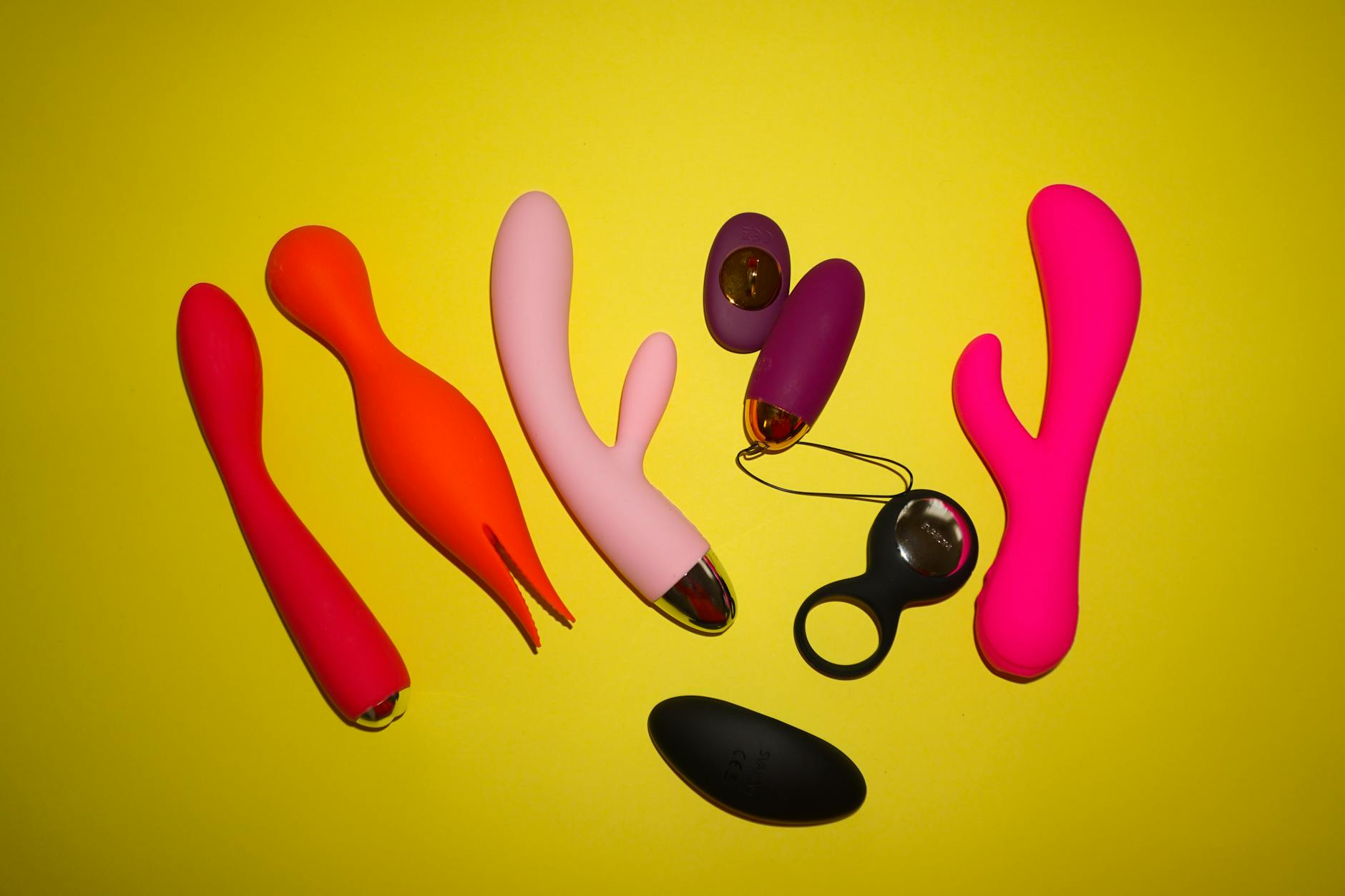
Why Lemon Vibrators Feel Different When You Have ADHD
Your brain processes sensation, focus, and arousal differently. Here's what that means for pleasure, and how lemon vibrators can actually work better when you know what's happening.
ADHD changes how your brain processes sensation and maintains focus. When you add a lemon vibrator into that mix, the experience can feel wildly different than it does for people without ADHD. And I don't just mean "harder to focus." I mean the vibration itself might register differently, arousal might build in a nonlinear way, and your nervous system might respond to stimulation in patterns that don't match the standard advice you find online.
This isn't a flaw. It's just your neurology. Once you understand what's actually happening, lemon vibrators and other clitoral vibrators become significantly more useful, not less.
ADHD involves differences in dopamine regulation and sensory filtering. Your brain is wired to either amplify or downregulate sensation depending on how much stimulation you're already receiving and what else is competing for your attention.
Here's the concrete part: when you're using a lemon vibrator, you might notice that:
The vibration feels numbing faster than it should. This isn't because your tissue is deadening. It's because your brain is habituating to the sensation. Habituation is normal for any repeated stimulus, but it happens faster and more intensely with ADHD because your sensory system cycles through stimuli more quickly.
Intensity feels inconsistent. One moment the vibration feels perfect, the next it feels too much or too little. This isn't the toy failing. It's your nervous system shifting how it's filtering that input based on stress, external sounds, racing thoughts, or something as small as a change in position.
You lose focus mid-session. A random thought about an email, a song lyric, or an intrusive worry suddenly takes center stage. The physical sensation is still happening, but your brain checked out. This is executive dysfunction at work. Your attention span isn't broken. It's just operating on a different cycle.
Everything works better when you're hyperfocused. When ADHD hyperfocus kicks in, pleasure often feels clearer, more sustained, and more intense. You're not just present. You're locked in. The lemon vibrator becomes an extension of that focus rather than something you're struggling to stay connected to.
Three things make lemon vibrators and other clitoral vibrators surprisingly well-suited to ADHD neurology.
Pattern variation. A quality lemon vibrator has multiple intensity levels and rhythmic patterns. If your brain habituates to pattern 1, you can shift to pattern 3. Your sensory system stays engaged because the input keeps changing. This is the opposite of a single-speed vibrator, which becomes background noise fast for ADHD brains.
Short, intense sessions work better. Instead of aiming for a 30-minute session like mainstream advice suggests, many ADHD folks find that 8-15 minutes of high-intensity pleasure using a lemon clitoral vibrator is more satisfying and realistic. Shorter sessions mean less time for your brain to wander, and less opportunity for habituation to set in.
Novelty maintains engagement. Mixing up where you use it, how you hold it, what position you're in, or what you're thinking about keeps your brain from filtering it out. ADHD brains crave novelty. That's not a limitation. It's just the architecture. A lemon vibrator's design and suction mechanism provide enough variation naturally.
Let's get real about intrusive thoughts and ADHD. You're in the middle of pleasure, and suddenly you're thinking about a project deadline or whether you said something awkward three years ago. This happens to everyone occasionally, but for ADHD folks, it's more frequent and more derailing.
Three strategies that actually work:
Create physical barriers to distraction. Put your phone in another room. Close the door. Tell your partner you need 20 minutes uninterrupted. This sounds obvious, but ADHD brains need external structure because the internal discipline is harder to access. Remove the option to check a notification.
Use a solo session as an experiment, not a performance. When you're alone with your lemon vibrator, you're not trying to reach an orgasm by a certain time or prove something works. You're gathering data. Notice what happens. Notice when your brain wanders. Notice what brings it back. The goal becomes curiosity, not completion. That shift often makes the whole experience less effortful and more enjoyable.
Accept that some sessions are about sensation, not climax. Not every session with a lemon clitoral vibrator needs to end in orgasm. Sometimes the point is just to feel pleasure, to explore what different patterns feel like, or to practice being present. When you release the outcome goal, ADHD brains often stay engaged longer.
ADHD can also mean you're hypersensitive to certain types of sensory input. Some people find that anything above pattern 2 on a lemon vibrator feels like it's almost bruising. Others need pattern 6 and still don't feel much.
This sensory variability is neurological, not psychological.
If you're hypersensitive to vibration intensity, start at the lowest setting and increase slowly. You might find that your sweet spot is objectively "low" compared to other users. That's fine. You're optimizing for your nervous system, not anyone else's.
If you struggle to feel much at all, experiment with different contact angles. The shaft of the lemon vibrator works differently than the tip. Light contact registers differently than firm pressure. Sometimes the issue isn't the toy. It's finding the exact configuration your sensory system is coded to feel.
Build in breaks. With ADHD, overstimulation can creep up on you without warning. Ten minutes of good sensation followed by a five-minute pause might work better than 20 minutes straight. Your nervous system gets a reset.
ADHD brains have lower baseline dopamine. That's the neurotransmitter involved in motivation, reward, and pleasure. This doesn't mean you can't experience pleasure. It means your brain is always hunting for stronger signals.
A lemon vibrator provides a novel, varied, intense stimulus. It lights up your reward system in a way that's hard to habituate to quickly because the sensations aren't monotonous. This is why many people with ADHD report that clitoral vibrators, especially those with multiple patterns, feel more reliably pleasurable than less varied tools.
Use this to your advantage. When you're choosing between a simple vibrator and a lemon clitoral vibrator with programmable patterns, the lemon wins for ADHD brains. When you're planning a session, evening and time of day matter less than choosing a moment when you have access to novelty and variation.
If you've recently discovered you have ADHD and you've been using lemon vibrators or other clitoral vibrators for years, you might suddenly understand why your experience felt different from what you read online. That clarity is useful. You're not broken. You're just operating with different wiring.
Starting ADHD medication can also change things. Some medications can affect arousal and sensation. This is temporary and usually settles after your body adjusts. If you're new to treatment, give yourself a few weeks before you decide whether your pleasure response has actually shifted, or whether it's just an adjustment period.
If you have a partner, they might notice that you use your lemon vibrator differently. You might need to switch patterns mid-session. You might lose focus and need a moment to come back. You might prefer shorter, more intense interactions over long, slow builds.
Talk about this before you use the lemon clitoral vibrator together. "My brain works differently with sensation," is a sentence that changes everything. It reframes your experience from seeming like disinterest or dysfunction to being a real neurological difference that you're working with intentionally.
Many partners find that ADHD brains are actually more responsive to variety and novelty during partner play. The same patterns that keep your solo sessions engaging work in partnered contexts too.
If you're using a lemon vibrator and genuinely feeling no pleasure at all, that's worth mentioning to a therapist familiar with ADHD. Sometimes anhedonia, which is the inability to feel pleasure, is a symptom that needs attention. Other times it's just about finding the right tool or context.
If ADHD is making it genuinely difficult to maintain any intimate connection, a therapist trained in ADHD can help you build systems that work with your brain instead of demanding you work against it.
Your pleasure is worth the effort of understanding how your neurology works. A lemon vibrator is just one piece. But when you're using it with full awareness of your ADHD sensory processing, focus patterns, and dopamine needs, it stops being a generic tool and becomes a precision instrument designed exactly for your body and brain.
Yes. Stimulant medications can change sensation and arousal temporarily, usually within the first two to four weeks. Some people report that vibration feels more intense when they're on medication. Others report the opposite. If you're starting ADHD treatment, give your body time to adjust before assuming your pleasure response has fundamentally changed. If changes persist beyond a month, talk to your prescriber. Different medications or dosages sometimes make a difference.
ADHD involves challenges with sustained attention, especially during activities that require you to stay internally focused without external stimulation. Even though the vibrator is providing physical sensation, your brain is still managing multiple cognitive tasks. The intrusive thoughts, racing mind, or sudden shift to something else happening in your environment is not a sign the toy isn't working. It's your executive function operating differently. Shorter sessions, removing other stimuli, and accepting that your attention will drift sometimes helps a lot.
Completely normal. ADHD involves faster sensory habituation, which means your brain adapts to repeated stimuli more quickly than neurotypical brains do. This is why pattern variation and taking breaks helps. Switching between different intensity levels or pausing for a few minutes lets your sensory system reset. You're not losing sensitivity permanently. You're just experiencing temporary adaptation.
Not necessarily, but you benefit from tools with versatility. A lemon vibrator with multiple patterns and intensity levels works better for ADHD brains than a simple single-speed toy. The variation keeps your brain engaged. If you're using a basic vibrator and struggling to feel interested, upgrading to one with more options is often worth trying.
Sensory stimulation, including using a lemon clitoral vibrator, can be regulating for some ADHD brains. The vibration provides input that helps organize your nervous system. That said, a vibrator is a pleasure tool first. If you're looking for sensory regulation specifically, that's a separate conversation. A therapist familiar with sensory processing can help you find strategies tailored to that need.
When ADHD hyperfocus activates, your brain's executive function, attention, and reward systems align. You're fully present and engaged. The lemon vibrator becomes the center of your awareness rather than competing with intrusive thoughts. This isn't something you need to fix. It's actually valuable information. You know that solo sessions during hyperfocus will likely be more satisfying than sessions when your attention is scattered. Use that knowledge to plan.
Your ADHD brain is not a barrier to pleasure. It's just a different operating system. Once you understand how it processes sensation, focus, and reward, tools like lemon vibrators become significantly more effective. Knowing your neurology is the first step. Using that knowledge to build a pleasure practice that works with your brain, not against it, is everything.
If you want to talk through what a sustainable, ADHD-friendly approach to intimacy looks like for you, reach out. I'm here to help.