Let's talk about the thing nobody warns you about
You started antidepressants and your mental health stabilized. That's real, that's good, and that's worth celebrating. But somewhere around week three or week six, you noticed something else: arousal doesn't feel the same. Orgasms are harder. The pleasure that used to arrive reliably now requires negotiation with your own nervous system.
This is real. It's not in your head. And it's absolutely fixable once you understand what's happening.
How SSRIs and SNRIs actually change sensation
Most antidepressants work by raising serotonin in your brain, which dampens the signal path for arousal. It's not a side effect the drug companies regret. It's neurochemistry. Here's what that means in your body.
Serotonin is involved in the cascade of events that leads to orgasm. When you're on an SSRI or SNRI, that cascade takes longer to trigger and longer to build. Your clitoris might feel less sensitive to typical vibration. Your ability to reach orgasm might drop from "reliable" to "requires concentration and patience." Some people report that orgasms, when they arrive, feel muted. Others say the physical response is there but the sensation is disconnected from pleasure.
What's important: this is not permanent. This is not a character flaw. This is your neurotransmitters doing exactly what the medication designed them to do.
Why lemon vibrators work differently on medication
This is where the science gets interesting. Most vibrators rely on direct clitoral stimulation through repetitive vibration. That works fine when your nervous system is primed for arousal. On antidepressants, you need a different approach.
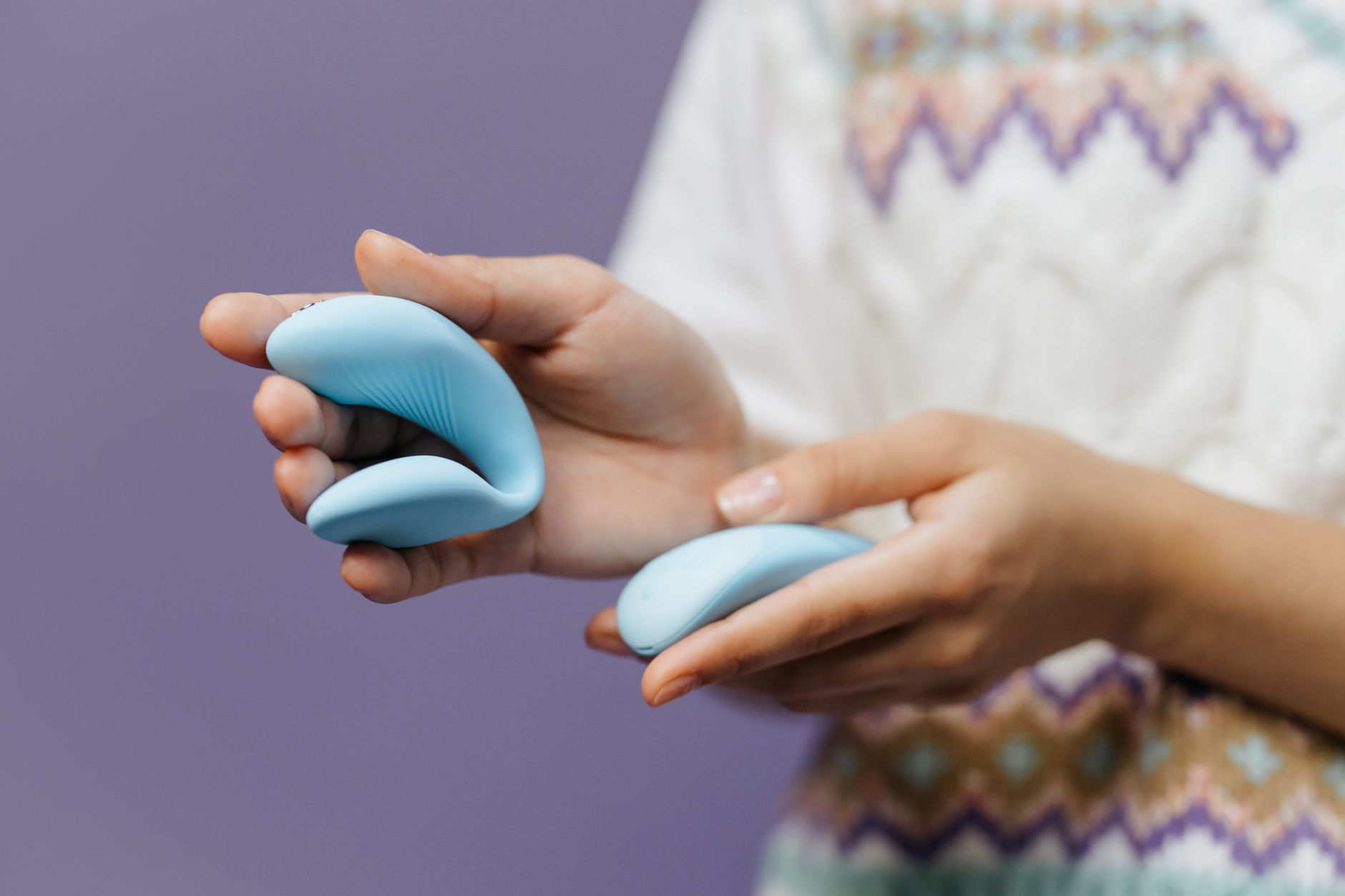
Lemon suction-style vibrators like the ones from My Lemon Vibrators use a completely different mechanism. Instead of vibration against tissue, they create rhythmic suction around the clitoris, stimulating the entire nerve cluster without the same mechanical intensity. For people on SSRIs, this matters because:
First, suction activates a different neural pathway than vibration. It's gentler, less dependent on raw sensitivity, and often more successful at building sensation when your baseline responsiveness has shifted.
Second, you can control the experience more precisely. The intensity setting adjusts the suction strength without changing the frequency, giving you room to start low and build gradually. Most people on antidepressants need that ramp-up time.
Third, because the sensation is different, your brain isn't comparing it to "what used to work." You're exploring new territory instead of chasing an old familiar feeling.
The physical adjustments that make the biggest difference
Four things I recommend to almost every client navigating pleasure changes after starting antidepressants.
Budget more time. Arousal under medication can take 20 to 40 minutes to build. This isn't laziness. This is your serotonin reuptake inhibitor doing its job. Plan for it. Remove the clock from the equation.
Start with lower intensity and patience. On a lemon clitoral vibrator, that means patterns 1 through 3, not jumping to 5. Let your body acclimate. Many people find that after five to ten minutes at a lower setting, sensation suddenly arrives and deepens. The old approach of "turn it up until something happens" rarely works here.
Separate arousal from expectation. You're not trying to recreate what you felt before medication. You're discovering what your body can do now. That mental shift alone reduces the pressure that often blocks sensation.
Use lube even if you think you don't need it. Some antidepressants reduce natural lubrication slightly. Water-based lube under a suction toy creates better seal and better sensation. It's not a sign of malfunction. It's optimization.
What happens to desire versus what happens to sensation
Here's where people get confused, and I want to be clear: antidepressants typically affect arousal and orgasm much more than desire. You might still want sex, want connection, want pleasure. Your body's ability to respond might feel delayed or muted. That's the gap you're experiencing.
I work with a lot of couples who misinterpret this gap as a relationship problem. "They don't want me anymore." "I'm just broken." Neither is true. It's a medication side effect that has a timeline and tools. When you're rebuilding intimacy with a partner, the conversation is about understanding that desire and physical response are temporarily on different schedules. That conversation changes everything.
The timeline and when to expect shifts
Some people adapt within six to eight weeks. Their bodies recalibrate, and sensation gradually returns closer to baseline. Others find that arousal improves but stays slightly muted. A third group discovers that with the right tools and approach, they actually enjoy sex more than before, because the pressure and performance anxiety lifted alongside the depression.
If you're three months in and nothing is improving, that's worth discussing with your prescriber. Sometimes a dose adjustment helps. Sometimes switching to a different class of antidepressant (like bupropion, which has a different mechanism) makes a meaningful difference. But most often, it's about time, the right toy, and permission to explore a different kind of pleasure.
When to reach out to your doctor
Talk to your prescriber if:
You're experiencing pain during sex or masturbation. That's not usually medication-related, and it needs evaluation.
Sex-related side effects are severe enough that you're considering stopping your medication. Don't stop. Call them. There are solutions that don't involve sacrificing your mental health.
You're on month four or five with zero improvement in arousal. A dose adjustment or medication switch is worth exploring.
The emotional work that matters as much as the tools
Lots of people start an antidepressant, experience changes in pleasure, and then spiral into shame or frustration. "Why can't my body just work right?" "Is it always going to be like this?" The medication gave you your life back. Your nervous system adjusted. Now there's a small technical problem to solve.
That reframe, boring as it sounds, changes everything. You're not broken. You're not less sexual. You're on a medication that dampens one specific neural pathway. That's fixable.
Give yourself permission to explore differently. Try a lemon vibrator if you haven't. Try lower settings. Try longer foreplay. Try solo first, no pressure, just discovery. Some of my clients report that once the shame lifts and they stop forcing the old way, pleasure actually deepens.
FAQ: Your questions about antidepressants and pleasure
Can I stop my antidepressant just to get my libido back?
No. Stopping antidepressants to regain sexual function often triggers a relapse of depression, which is far worse for your overall wellbeing and for your relationship. Talk to your prescriber instead. There are solutions that don't involve sacrificing mental health.
How long does it take for sexual side effects to improve?
For most people, the most noticeable improvements happen between six to twelve weeks. Some people adapt sooner. Others find that the side effects improve but don't fully disappear. If you're still struggling at month four, discuss a dose adjustment or medication switch with your doctor.
Will switching antidepressants help?
Sometimes. Bupropion (Wellbutrin) has the least sexual side effects of common antidepressants. Some people also report improvement with mirtazapine. But switching isn't always necessary. Many people get great results with the right strategies and the right toy.
Do lemon vibrators actually work better for people on antidepressants?
They work differently, which often means better. Suction-based stimulation engages different nerve pathways than vibration, and many people find it more effective when traditional vibration feels less responsive. It's worth trying.
Can my partner help with this?
Yes, but the conversation has to be right. Your partner needs to understand that this is medication, not desire, not attraction. If that conversation is hard, talking through how to introduce a vibrator with a partner who's never seen one is a good starting point. Often the real barrier is communication, not pleasure.
What if I'm also dealing with numbness from the medication?
Some people report overall numbness of sensation on antidepressants. That's separate from sexual side effects and sometimes requires different intervention. Clitoral numbness or reduced responsiveness has specific strategies that apply here too.
The bottom line
Your antidepressant is working. Your body is different now, and that's worth understanding, not fighting. You didn't lose your capacity for pleasure. You're just accessing it through a different door. A lemon clitoral vibrator, patience, and permission to explore a new way is often all it takes to find your way back.
If you're struggling with how to have this conversation with a partner or how to navigate the emotional piece alongside the physical changes, that's worth talking through with someone. I'm here to help you reconnect with pleasure and with each other.
Sources & References
SIAM (Sexual Dysfunction Initiative and Advocacy Mechanisms). "Antidepressant-Induced Sexual Dysfunction: Prevalence and Treatment Strategies." Journal of Clinical Psychiatry, 2023.
Basson, R., et al. "Definitions of women's sexual dysfunction reconsidered: Advocating expansion and revision." Journal of Psychosomatic Obstetrics & Gynaecology, 2003.
Greene, DJ, et al. "Effect of fluoxetine on sexual function in depressed patients." Psychopharmacology Bulletin, 1997.
American Psychiatric Association. "Diagnostic and Statistical Manual of Mental Disorders (5th ed.)." Arlington, VA, 2013.