How to Use Lemon Vibrators When Returning to Pleasure After Body Image Shifts
Let's be real. Your body changes. Sometimes it's weight, sometimes it's surgery, sometimes it's just the slow accumulation of living. And when your body shifts, so does your relationship with pleasure. That disconnect is real, and it's not something you can think your way out of.
What I see clinically is that pleasure doesn't leave your body when your body changes. It gets crowded out by self-consciousness. The neural pathways for sensation are still there. The capacity for orgasm is still there. But the permission? That's what vanishes first. And that's exactly what lemon vibrators can help you reclaim, because they offer something specific: a way to focus purely on sensation without having to see yourself, compare yourself, or perform yourself.
If you've been avoiding your own pleasure because your body feels foreign to you right now, this post is for you. I'm going to walk you through how to use lemon vibrators to rebuild that connection, starting from a place of radical self-compassion instead of punishment.
The disconnect between body and pleasure is psychological, not physical
Here's what happens when your body changes: your brain gets stuck in a loop. You see the change, you interpret it as "wrong" or "less desirable," and then you assume your partner sees it the same way. You start avoiding being seen, which means avoiding being touched, which means avoiding pleasure entirely. It all feels physiological, but it starts with a story you're telling yourself.
The nervous system doesn't actually care what your body looks like. It responds to touch, pressure, rhythm, and attention. Clitoral nerve endings don't judge. Arousal doesn't require you to like your reflection. And orgasm doesn't check your BMI at the door.
But your brain does care about the story. So the first shift is separating the two conversations: "My body is different" and "I'm not worthy of pleasure." Those are not the same thing, even though they feel tangled together right now.
Why lemon vibrators work specifically for this transition
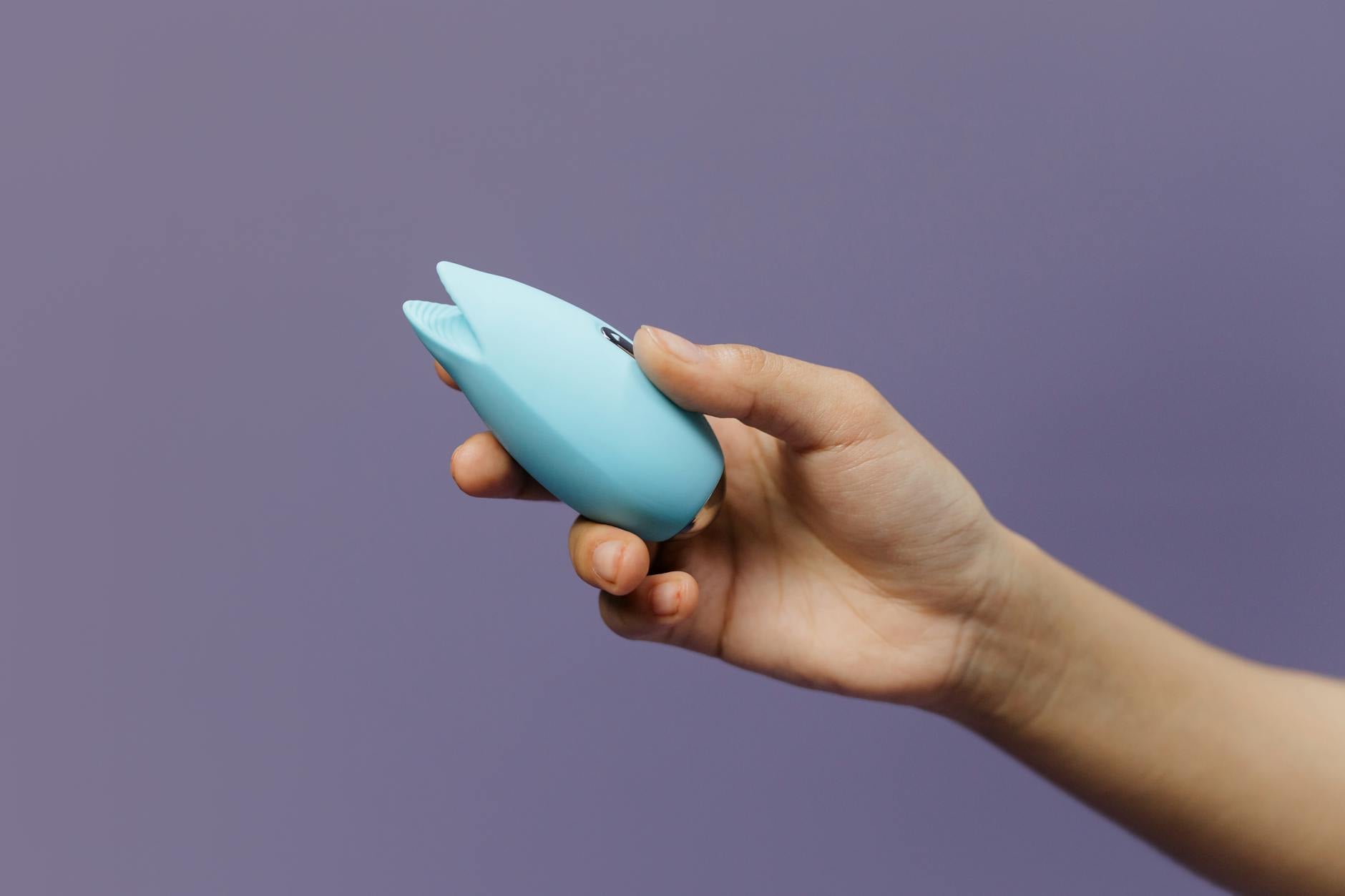
Lemon vibrators, particularly air-suction models like the lemon clitoral vibrator, create a very specific advantage when you're rebuilding pleasure after body image shifts. They require you to focus on sensation in isolation.
Unlike penetrative toys or wand vibrators, lemon vibrators don't ask you to think about your body's shape or size. The suction mechanism works the same way on every clitoris. There's no visual comparison required. You're not lying down wondering how you look from above. You're not performing for anyone. You're just receiving stimulus.
Secondly, the intensity is tiered. You can start on the lowest setting (pattern 1 or 2) and layer in sensation slowly. This matters because when you've been avoiding your own body, jumping to a high-intensity experience can feel jarring or even dysphoric. Low and slow lets you ease back into sensation without forcing anything.
Third, lemon vibrators are portable and private. You don't need a partner present to rebuild this connection. You don't need to perform. You can use one in the bath, under covers, or anywhere you feel safe.
Step 1: Separate the pleasure session from the body check-in
This is the most important step, and it sounds simple but requires real intention. When you sit down to use your lemon vibrator, you are not having a session to "see if your body still works" or "check whether you can still orgasm." That's performance anxiety dressed up as exploration.
Instead: you are having a sensory experience. The goal is not an orgasm. The goal is to notice what happens. Sensations. Breath. The way pressure travels. Whether your mind wanders. What thoughts interrupt. The goal is data, not outcome.
Set a timer for 20 minutes. Turn off your phone. Tell yourself you can stop at any point without judgment. The moment you feel pressure to "succeed," pause and name it out loud: "I'm putting pressure on myself right now." Then return to just receiving sensation, no expectation.
Many people find that an orgasm happens naturally once the pressure is gone. Some people take several sessions to feel anything. Both are completely normal when you're rebuilding this connection.
Step 2: Use lube and start with the lowest intensity setting
When you've been avoiding your body, your natural lubrication might be lower. This isn't a sign your body is broken. It's a sign you've been in sympathetic nervous system activation (fight-or-flight mode) around your own pleasure. Adrenaline is a lube suppressant.
Add water-based lubricant generously. This removes friction and pressure and lets you focus purely on the pressure of the suction itself. It also sends your nervous system a permission signal: "This is an act of self-care. This is safe."
Start on setting 1 or 2 of your lemon clitoral vibrator. Not because your body is fragile, but because you're rebuilding from a place of disconnection. Low intensity lets you notice sensation without being overwhelmed by it. You can always move up. You can't undo going too hard too fast.
Many people report that they get much more sensation from a lower setting than they expected, precisely because they're relaxed enough to feel it.
Step 3: When your mind wanders to body judgment, notice and redirect
Your brain will do this. You'll be receiving sensation and then suddenly you'll think "but my stomach" or "my thighs look like" or "what if my partner..." This is not a failure. This is just what happens when you've been dissociated from your body.
When you notice the thought, you have three options:
Option 1: Pause, acknowledge the thought out loud ("I'm having a thought about how I look"), and then bring your attention back to sensation. "What do I feel right now? Pressure? Warmth? Rhythm?"
Option 2: Name the specific sensation you're having instead. "My clitoris is responding to suction" or "I feel pressure shifting as the intensity builds." This grounds you in the physical rather than the critical.
Option 3: If the thought is persistent and painful, stop the session. You've done what you needed to do. Five minutes of presence is more valuable than thirty minutes of self-criticism.
Step 4: Separate solo pleasure from partnered intimacy (for now)
If you're partnered, this is important. Rebuilding your own connection with pleasure is not the same as being ready to be intimate with someone else. Those are two different processes.
Use lemon vibrators solo for at least 2-3 weeks before introducing them or returning to partnered sex. This does two things: it rebuilds your own nervous system's capacity to relax into pleasure without performance pressure, and it gives you concrete proof that your body still responds. You have data now, not just fear.
Once you've had a few solo sessions where you felt something, you're in a totally different position to communicate with a partner. You can say "I'm rebuilding this," rather than "My body is broken." That shifts the entire conversation.
When body image is tied to deeper relationship patterns
Sometimes body image shifts are just about the body. But often they're woven into bigger relationship dynamics. You feel less desirable, so you become less initiating. You initiate less, so you get less validation. You feel less validated, so you isolate more.
If this is happening in your relationship, a lemon vibrator can't fix that alone. It can rebuild your individual capacity for pleasure, which is step one. But if your partner has also withdrawn, or if you're using body image as a proxy for "we've grown apart," that's a conversation that needs to happen outside the bedroom.
Sometimes rebuilding emotional connection needs to come first. Sometimes the disconnection is about deeper intimacy patterns that pleasure alone won't address. A clitoral vibrator is a tool for sensation, not a relationship therapy device.
The role of patience in rebuilding pleasure
Your body didn't stop responding overnight. It slowly withdrew as you withdrew from it. That same slow return is actually what you want. Fast recovery feels like white-knuckling. Slow, steady reconnection feels real and sustainable.
Expect the first 2-3 sessions to feel strange. Maybe numb. Maybe overstimulating. Maybe nothing. None of that means anything about your future capacity for pleasure. It just means you're starting.
Expect session 4-6 to feel slightly better. Expect session 8-10 to surprise you. Expect that your relationship with your body will keep shifting as you keep showing up for yourself.
The lemon vibrator isn't a magic fix. It's a tool that says to yourself: "I deserve to feel good. My body deserves attention. My pleasure matters, regardless of what I look like."
FAQ
What if I still feel numb after using a lemon vibrator several times?
Numbness after body image shifts is incredibly common. It's not physical numbness. It's emotional dissociation that lives in your nervous system. Numbness usually means you need more time, lower intensity, and more lube. Some people also find that they need external support first (therapy, somatic work, relationship counseling) before pleasure returns. That's not a character flaw. That's just knowing when you need a bigger tool than a vibrator.
Can I use lemon vibrators if I'm still in the phase where I hate my body?
Yes, actually. You don't have to love your body to use pleasure as a tool to reconnect with it. You just have to be willing to separate "I have feelings about my body" from "I deserve sensation." Those two things can coexist. You can hate your belly and still receive clitoral stimulation. The lemon vibrator doesn't require you to feel confident. It just requires you to show up.
Should I tell my partner I'm using a lemon vibrator to rebuild pleasure?
That depends on your relationship and your comfort level. If you're partnered and monogamous, some couples find that solo pleasure is off-limits, and that's a conversation to have. Most couples find that solo pleasure actually supports partnered intimacy because you're not putting all the pressure on your partner to "fix" your body image. My recommendation: tell them when you're ready, not before. Rebuild your own connection first. Then decide how to invite your partner in.
How long before I can use a lemon vibrator with my partner?
There's no timeline, but I usually suggest waiting until you've had at least a few solo sessions where you felt something. That way, when you introduce it to partnered play, it's not the first time you're trying to feel anything. You already have proof it works for you. That changes the whole dynamic from "let me see if this helps me" to "I actually like this, and I want to share it."
What if using a lemon vibrator makes me feel worse about my body?
Stop and reassess. If the tool is triggering more self-criticism instead of creating space for sensation, it's not the right tool right now. That doesn't mean lemon vibrators are wrong. It means you might need a different approach first. Some people need to start with touch alone, or guided meditation, or therapy before tools feel good. Honor that.
Can body image shifts affect orgasm intensity even if I do feel sensation?
Yes. Many people report that orgasms feel different after body image shifts, even once sensation returns. They might feel less intense, more localized, or require longer build-up time. This isn't permanent. It usually shifts as your nervous system relaxes into safety. But knowing it's a possibility prevents you from interpreting a different orgasm as a "broken" one. Different is just different.
Moving forward
Your body changed. That's real. Your pleasure didn't disappear. That's equally real. The gap between those two facts is where you live right now, and it's narrow and uncomfortable.
Lemon vibrators are one way to close that gap because they let you focus on sensation without sight, performance, or comparison. They let you prove to yourself that your body still responds, still deserves attention, still knows how to feel good.
Start small. Expect nothing. Show up for yourself anyway. That's the whole practice.